Leo: Integrating Skeletal Typography into Thematic Visual Design
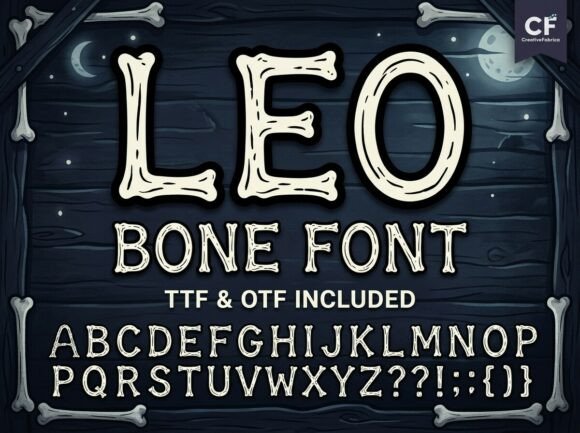
In the vast landscape of typographic design, display fonts serve as the primary vehicle for establishing immediate mood and narrative context. While clean sans-serifs and traditional serifs dominate functional text, specialized projects require typefaces that carry intrinsic storytelling weight. Leo Creative Bone Font emerges as a distinct solution for designers seeking to bridge the gap between macabre aesthetics and whimsical playfulness. Unlike standard horror fonts that often rely on distressed edges or dripping effects, Leo constructs its identity through structural mimicry, where every glyph is meticulously crafted from bone-inspired shapes. This anatomical approach to letterform design offers a unique set of advantages for professionals working in entertainment, education, heritage branding, and experiential marketing.
Anatomical Construction and Visual Texture
The defining characteristic of Leo is not merely its thematic association with skeletons, but the specific way organic textures are translated into vector geometry. Standard novelty fonts often apply a texture overlay to existing letterforms, resulting in a superficial aesthetic. In contrast, Leo treats the bone structure as the fundamental architecture of the character. The knobby joints and tapered shafts observed in the font mirror actual skeletal morphology, creating a silhouette that feels biologically plausible rather than artificially imposed.
This attention to anatomical detail influences how the human eye processes the text. The irregularities inherent in bone shapes create a rhythmic visual cadence that differs significantly from the uniform spacing of geometric typefaces. For designers, this means Leo possesses a built-in dynamism; it does not sit statically on the page but appears to articulate and move. The organic textures provide tactile depth even in digital formats, reducing the need for additional post-processing effects like grunge overlays or noise filters. When scaled up for large-format printing, these structural nuances remain crisp, ensuring that the skeletal charm translates effectively from screen to physical media.
Balancing Macabre and Whimsical Tones
A critical challenge in thematic design is avoiding cliché. Horror and archaeology projects frequently suffer from overly aggressive typography that alienates broader audiences. Leo navigates this by maintaining a playful yet spooky silhouette. The proportions are bold without being menacing, allowing the font to function in contexts ranging from family-friendly Halloween events to serious museum exhibitions. This tonal versatility stems from the rounded nature of the bone joints and the generous counter spaces within the letters, which prevent the typeface from appearing too sharp or hostile. Designers can leverage this duality to create work that acknowledges dark themes while remaining accessible and engaging.
Strategic Applications Across Industries
The utility of a specialized display font like Leo extends beyond seasonal decoration. Its distinct visual language solves specific communication problems across various sectors. Understanding these use cases helps professionals determine when and how to deploy skeletal typography effectively.
- Experiential Entertainment: Escape rooms, haunted attractions, and immersive theater productions rely heavily on environmental storytelling. Leo serves as an ideal choice for signage, prop labels, and promotional posters because it reinforces the diegetic world of the experience. The font’s bold presence ensures legibility in low-light conditions common in these venues, while its stylistic consistency helps unify disparate visual elements into a cohesive brand identity.
- Heritage and Archaeology Branding: Museums and historical sites often struggle to make osteological or paleontological exhibits visually engaging without resorting to dry academic formatting. Leo provides a respectful yet captivating alternative for exhibit titles and educational panels related to fossils, anatomy, or ancient burial practices. It signals to visitors that the content is tangible and connected to physical remains, bridging the gap between scientific accuracy and public engagement.
- Nautical and Pirate Aesthetics: Maritime history and pirate-themed graphics have long been associated with skeletal imagery. However, traditional pirate fonts often lean toward illegible blackletter scripts. Leo offers a modernized interpretation that retains the nautical connection to mortality and adventure while prioritizing readability. This makes it suitable for craft beverage labeling, festival branding, and merchandise where quick recognition is essential.
- Seasonal Retail and Packaging: For businesses capitalizing on Halloween or Day of the Dead markets, packaging differentiation is key. Leo functions effectively as a primary logotype or headline element on product packaging, shelf talkers, and window decals. Its unique construction ensures that products stand out against competitors using generic spooky fonts, potentially increasing shelf impact and consumer recall.
Technical Implementation and Pairing Strategies
Integrating a highly stylized typeface requires careful consideration of hierarchy and contrast. Because Leo commands significant visual attention, it should rarely be used for extended body copy. Instead, it performs best as a headline, subhead, or accent element. The success of a layout featuring Leo often depends entirely on what it is paired with.
Selecting Complementary Typefaces
To maintain readability and professional polish, Leo should be anchored by neutral supporting typefaces. A clean geometric sans-serif, such as Montserrat or Futura, provides necessary stability against Leo’s organic irregularities. Alternatively, a high-contrast serif can evoke a vintage or academic feel that complements the archaeological undertones of the bone structures. Designers should avoid pairing Leo with other decorative or textured fonts, as this creates visual competition and reduces overall legibility. The goal is to let Leo act as the singular focal point of typographic expression within the composition.
Color selection also plays a pivotal role in how Leo is perceived. While white-on-black is the expected convention for skeletal themes, experimenting with unexpected palettes can yield sophisticated results. Deep teals, muted terracottas, or parchment tones can shift the perception from "horror" to "historical artifact." Conversely, neon accents against dark backgrounds can push the aesthetic toward cyberpunk or modern gothic. Testing color combinations at actual print size is essential, as the intricate details of the bone joints may merge or disappear if contrast ratios are insufficient.
Accessibility and Legibility Considerations
While display fonts prioritize aesthetics over utility, responsible design demands attention to accessibility. Leo’s complex forms present specific challenges that designers must navigate to ensure inclusive communication. The organic shapes and varying stroke widths can reduce character recognition speed, particularly for viewers with dyslexia or visual impairments.
To mitigate these issues, Leo should be reserved strictly for non-essential decorative text or short headlines where context aids comprehension. Critical information, such as dates, times, safety instructions, or navigation directions, must always be presented in a highly legible, accessible typeface. Furthermore, designers should ensure adequate letter spacing when setting Leo. Tight tracking can cause the knobby joints of adjacent characters to collide, creating confusing ligatures that hinder reading flow. Increasing tracking slightly preserves the integrity of each bone-shaped glyph and improves overall scanability.
Alt text protocols also require adjustment when using Leo in digital environments. Screen readers cannot interpret the visual style of a font, so the semantic meaning of the text must be conveyed through proper HTML tagging and descriptive attributes. If Leo is rendered as an image for stylistic control, the alt text should describe both the content and the relevant visual tone, ensuring that users who cannot see the skeletal aesthetic still receive the intended atmospheric context.
Evaluating Return on Investment in Niche Typography
For business owners and creative directors, investing in specialized assets like Leo Creative Bone Font is a strategic decision. The value proposition lies in brand differentiation and time efficiency. Custom lettering that mimics bone structures typically requires significant illustration hours or expensive commissioning fees. A dedicated typeface provides instant access to this aesthetic at a fraction of the cost, allowing for rapid iteration and consistent application across multiple touchpoints.
Moreover, the specificity of Leo reduces the risk of generic branding. In saturated markets like horror entertainment or seasonal retail, distinctiveness drives conversion. When a poster or package design utilizes a font that feels custom-crafted rather than pulled from a free repository, it elevates the perceived quality of the entire project. This psychological association between typographic effort and product value can justify premium pricing or increase attendance for ticketed events. By treating typography as a core component of the user experience rather than an afterthought, organizations can leverage tools like Leo to create memorable, emotionally resonant communications that endure beyond fleeting trends.