Psych: Integrating Retro-Theatrical Typography into Modern Design Workflows
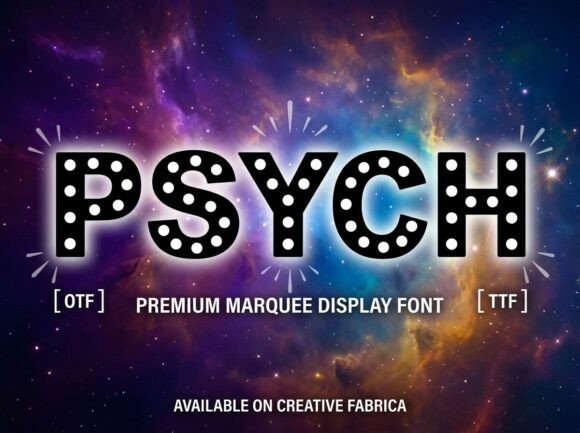
Selecting the right display typeface is often the most critical decision in establishing a visual identity for entertainment and event-based projects. Psych serves as a specialized tool within this selection process, offering a high-energy aesthetic that bridges vintage Broadway marquees with contemporary digital branding. Unlike standard sans-serif or decorative fonts, Psych is defined by massive, blocky letterforms featuring integrated theatrical lightbulb patterns. This structural uniqueness requires a specific approach to implementation, ensuring the font enhances rather than overwhelms the overall design system.
For designers, marketers, and business owners, understanding where Psych fits into the creative workflow is essential for maximizing its impact. It is not a utility typeface for body copy or interface elements; it is a strategic asset reserved for moments requiring maximum attention. By treating Psych as a focal point in the planning phase, teams can build supporting assets that complement its heavy weight and radiant personality without creating visual competition.
Strategic Positioning in the Creative Process
The integration of Psych should begin during the conceptualization and mood-boarding phases of a project. Because the typeface carries significant historical and cultural associations with mid-century theater and cinema, it dictates a specific tonal direction. Before opening design software, evaluate whether the project’s goals align with the font’s inherent characteristics. Psych works best when the objective is to evoke nostalgia, excitement, or premium entertainment value. If the brand voice is minimalist, corporate, or subdued, this typeface may create cognitive dissonance rather than engagement.
During the drafting stage, use Psych to establish the hierarchy anchor. Its heavy structural weight naturally commands the top tier of visual importance. When sketching layouts for independent theater identities or boutique entertainment logos, place the Psych wordmark first and arrange secondary elements around it. This "type-first" approach prevents the common issue of trying to force a bold display font into a pre-existing layout designed for lighter typography. The integrated lightbulb details require adequate negative space to remain legible and distinct; crowding these forms diminishes their retro-radiant effect.
Pre-Production Considerations
- Audience Alignment: Verify that the target demographic responds positively to retro-theatrical aesthetics. While Psych appeals to adults aged 20–50 through nostalgia and trend cycles, ensure the specific execution matches the sophistication level of the venue or product.
- Color Strategy Planning: The lightbulb pattern implies illumination. Plan color palettes that support this metaphor, such as dark backgrounds with warm accent colors, rather than flat, low-contrast combinations that flatten the dimensional effect.
- Licensing Verification: Confirm usage rights early in the procurement phase. Display fonts used for commercial signage, merchandise, or ticketed events often have different licensing tiers than those used for personal blogs or educational presentations.
Technical Implementation and Cross-Platform Compatibility
Executing designs with Psych requires attention to technical specifications across various media. The intricate lightbulb patterns are vector-based, meaning they scale infinitely for large-format printing but can present challenges in small-scale digital applications. In web environments, ensure the font files are optimized to prevent slow load times, as detailed display fonts can be heavier than standard text faces. For social media headers and digital ads, test rendering at multiple viewport sizes to guarantee the bulb details do not pixelate or blur on mobile devices.
When integrating Psych into video workflows for motion graphics or event promos, consider how the static lightbulb pattern translates to animation. The font’s design invites dynamic treatment, such as flickering effects, neon glows, or sequential lighting animations. However, these effects must be applied with restraint. Over-animating an already complex typeface can reduce readability. Use subtle opacity shifts or glow filters to enhance the existing pattern rather than replacing it entirely. This maintains the font’s integrity while adapting it for temporal media.
Compatibility with other design assets is another practical concern. Psych pairs effectively with clean, geometric sans-serifs or traditional serif typefaces that provide a neutral backdrop. Avoid combining it with other highly decorative or textured fonts, as this creates visual noise. In production workflows involving multiple stakeholders, establish clear guidelines for minimum size and spacing. A style guide entry for Psych should specify that it is never to be used below a certain point size or in all-caps settings where letter-spacing becomes problematic due to the blocky construction.
Workflow Integration for Teams
- Asset Library Organization: Tag Psych clearly in shared font managers or cloud libraries with descriptors like "display," "retro," "theatrical," and "high-impact" to streamline searchability for team members.
- Template Creation: Develop master templates for recurring deliverables like event posters or Instagram stories that already account for Psych’s spacing and sizing requirements, reducing setup time for future campaigns.
- Quality Control Checkpoints: Implement a specific review step for Psych usage to verify legibility, contrast ratios, and appropriate contextual application before final approval.
- Vendor Communication: When sending files to print vendors for signage or merchandise, outline the font explicitly and request physical proofs to ensure the lightbulb details reproduce correctly on the chosen substrate.
Application Across Business and Creative Verticals
Different professional contexts demand varied approaches to utilizing Psych. For independent theaters and performance venues, the font serves as a direct signifier of live entertainment heritage. In this context, consistency is key. Using Psych across season announcements, wayfinding signage, and digital ticketing platforms creates a cohesive brand environment that enhances the audience experience from discovery to attendance. The font becomes part of the venue’s architectural identity, reinforcing the promise of a curated, high-quality performance.
For entrepreneurs and small business owners in the boutique entertainment space—such as escape rooms, speakeasies, or vinyl bars—Psych functions as a differentiation tool. In saturated markets, distinctive typography can signal niche expertise and atmosphere. Here, the font might appear primarily on storefront signage, menu headers, and limited-edition merchandise. The goal is to create tactile, memorable touchpoints that encourage social sharing. When used on merchandise, ensure the design accounts for production methods; screen printing may require simplified versions of the lightbulb pattern, while embroidery might need adjusted stroke widths.
Educators, bloggers, and content creators can leverage Psych for high-impact digital headers and thumbnail text. In these fast-scrolling environments, the font’s bold silhouette aids in instant recognition. However, accessibility must remain a priority. Always pair Psych with alt text descriptions and ensure sufficient color contrast for users with visual impairments. The theatrical nature of the font should enhance content comprehension, not hinder it. For educational materials related to film history, theater arts, or design, Psych provides an authentic visual anchor that reinforces subject matter expertise.
Maintenance and Long-Term Brand Evolution
Trends in retro typography cycle regularly, but Psych’s specific blend of structural weight and thematic detail gives it longevity beyond fleeting fads. To maintain relevance over time, focus on evolving the application rather than abandoning the asset. Refresh color palettes, update supporting photography styles, or experiment with new layout grids while keeping the core typeface constant. This approach preserves brand equity while preventing visual stagnation.
Monitor performance metrics associated with Psych usage, particularly in digital marketing and social media. Track engagement rates on posts featuring the typeface versus those using alternative typography. If certain applications consistently underperform, reassess the execution rather than the font itself. Often, issues stem from poor contrast, inadequate sizing, or mismatched messaging rather than the typeface design. Data-driven refinement ensures Psych remains a productive asset in the creative toolkit.
Finally, document lessons learned during implementation. Create internal case studies noting which color combinations worked best, what minimum sizes proved legible in print, and how audiences responded to animated versus static treatments. This institutional knowledge streamlines future projects and helps onboard new team members efficiently. By treating Psych as a systematic component of the design infrastructure rather than merely a stylistic choice, professionals can extract sustained value from its unique retro-and-radiant character.
The successful deployment of Psych hinges on respecting its dual nature as both a functional communication tool and an expressive artistic element. When integrated thoughtfully into planning, production, and evaluation workflows, it delivers show-stopping results that resonate with audiences seeking authentic, high-energy visual experiences. Whether defining a theater’s marquee, launching an event campaign, or crafting a digital presence, Psych offers a distinctive vocabulary for brands ready to command attention with confidence and historical resonance.