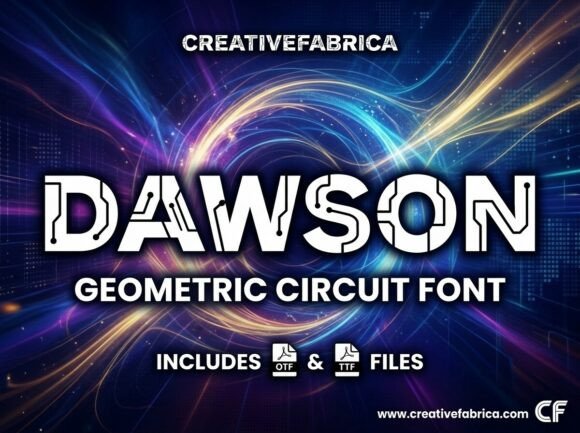
Dawson: Hard-Wiring Your Brand Identity for the Future
In the crowded landscape of digital branding, finding a typeface that communicates technical precision without sacrificing personality is a genuine challenge. Many designers and brand managers settle for generic techno fonts that feel dated or overly sterile. Dawson offers a distinct alternative by bridging the gap between high-end hardware engineering and modern sci-fi aesthetics. This precision display typeface captures a cybernetic soul through massive, blocky letterforms characterized by rhythmic motherboard pathways and terminal nodes. However, leveraging Dawson effectively requires more than just installing the font files; it demands an understanding of its structural weight and specific use cases to avoid common pitfalls that can undermine your design intent.
Understanding the Cybernetic Aesthetic
Dawson is not a universal solution for every tech-related project. It is a specialized tool designed for specific environments where visual impact and thematic consistency are paramount. The typeface features heavy structural weight and intricate internal details that mimic circuit traces and data flow. This makes it the premier choice for independent e-sports team identities, boutique cybersecurity logos, futuristic gaming interfaces, and high-impact neon-and-next-gen social media headers.
The mistake many creators make is treating Dawson as a standard sans-serif replacement. When used in body copy or small-scale UI elements, the intricate motherboard pathways become visual noise rather than stylistic flair. The complexity that makes Dawson stunning at 72pt renders it illegible at 12pt. Before committing to this typeface, evaluate whether your primary touchpoints are display-oriented. If your brand relies heavily on long-form text readability, Dawson should be reserved strictly for headlines and logos, paired with a clean, neutral sans-serif for supporting content.
Avoiding Legibility Traps in Digital Interfaces
One of the most frequent errors in applying futuristic typography is prioritizing style over function in user interfaces. While Dawson excels in gaming HUDs and cyberpunk overlays, its unique node structures can interfere with rapid information processing if misapplied.
- Contrast Management: The internal pathways of Dawson create varying density within each glyph. On low-resolution screens or against busy backgrounds, these details can vibrate or disappear. Always test your color combinations at the smallest intended display size.
- Spacing Adjustments: Display typefaces often have tighter default tracking than interface fonts. In a gaming menu or dashboard, tight kerning can cause the terminal nodes to visually merge. Manually adjusting letter-spacing is usually necessary to maintain clarity during fast-paced interaction.
- Hierarchy Clarity: Because Dawson carries so much visual weight, using it for multiple levels of hierarchy flattens the design. Reserve the heaviest weights for primary actions or titles only. Use lighter alternatives or different type families for secondary navigation to prevent cognitive overload.
By respecting these functional boundaries, you ensure that the futuristic aesthetic enhances rather than hinders the user experience. A beautiful interface that frustrates users ultimately fails its purpose, regardless of how well it matches the brand theme.
Navigating Licensing and Technical Compatibility
Beyond visual application, practical oversights regarding licensing and file formats frequently derail projects. Dawson’s positioning as a premium display face means it often comes with specific licensing tiers that differ from open-source alternatives. A common misunderstanding is assuming a desktop license covers web embedding or app usage. For e-sports teams streaming on Twitch or cybersecurity firms deploying software dashboards, verifying the correct license tier is essential to avoid legal complications later.
Technical compatibility also warrants careful attention. The complex vector paths that define Dawson’s character can sometimes cause rendering issues in certain game engines or older browsers. Before finalizing a brand identity built around this typeface, test the actual font files in your target environment. Some platforms may simplify the curves or fail to render the terminal nodes correctly, stripping away the very details that justify choosing Dawson in the first place. Having a fallback strategy or a simplified alternate version for edge cases is a sign of professional foresight, not compromise.
Strategic Pairing and Contextual Balance
Dawson’s strong personality demands thoughtful pairing. A frequent misstep is combining it with other decorative or distressed typefaces in an attempt to amplify the sci-fi vibe. This approach typically results in a chaotic composition where no single element commands attention. The cybernetic complexity of Dawson needs breathing room.
Consider the principle of contrast. Pair Dawson with geometric sans-serifs that share similar x-heights but lack ornamental detail. This creates a cohesive system where Dawson acts as the anchor while supporting typefaces handle utility. For cybersecurity brands, this balance communicates both innovation and reliability. For gaming identities, it suggests both immersive world-building and competitive professionalism.
Also consider the cultural context of your audience. The motherboard aesthetic resonates strongly with enthusiasts who appreciate hardware authenticity. However, if your target demographic includes general consumers less familiar with tech internals, ensure the overall design language remains accessible. Dawson should signal sophistication, not exclusion. Testing designs with representative audience segments can reveal whether the typographic choices communicate the intended message or merely confuse viewers unfamiliar with the genre conventions.
Evaluating Long-Term Viability
Trends in futuristic design cycle rapidly. What feels cutting-edge today may appear dated within a few years. When investing in Dawson for brand identity, think beyond immediate trend alignment. Focus on the underlying qualities that give the typeface longevity: its solid construction, balanced proportions, and genuine connection to technological themes rather than superficial decoration.
Brands that succeed with distinctive typography do so because they integrate it into a broader visual system rather than relying on novelty alone. Document clear usage guidelines specifying when and how to deploy Dawson. Define minimum sizes, approved color treatments, and prohibited modifications. These guardrails protect the integrity of the typeface across different applications and prevent gradual degradation through inconsistent implementation.
Ultimately, Dawson represents a commitment to a specific vision of the future—one grounded in precision, complexity, and tangible engineering. By approaching its selection and application with care, avoiding common mistakes, and respecting both its aesthetic power and functional limitations, you can hard-wire this distinctive voice into your brand’s identity for years to come. The goal isn’t just to look futuristic momentarily, but to build a lasting foundation that authentically connects with audiences who value technical excellence and forward-thinking design.