Earthy: Strategic Application of Botanical Typography in Brand Identity
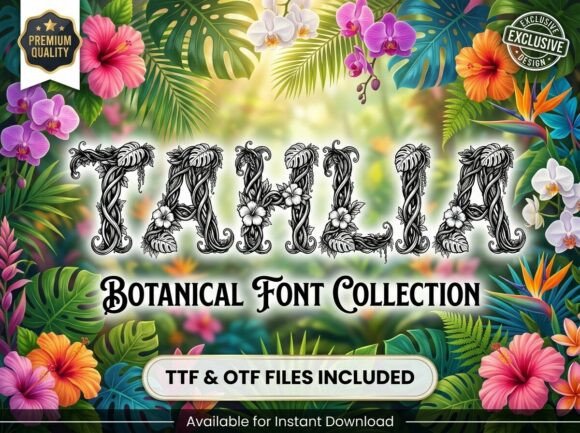
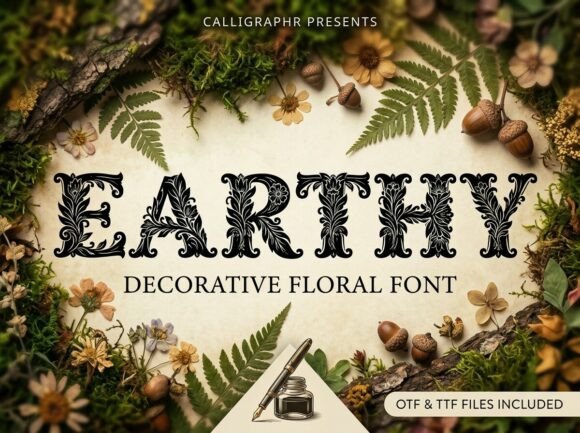
Step into a magical woodland sanctuary, a realm of timeless fairytale romance and high-end botanical artistry with Earthy, a breathtaking decorative floral font. For designers, brand strategists, and product developers, this typeface represents more than mere ornamentation; it is a functional design asset engineered for specific commercial and artistic outcomes. Meticulously optimized with razor-sharp vector paths, Earthy preserves every fine engraving and hollowed-out linework detail across large physical prints and digital screens alike. This technical precision allows the typeface to bridge the gap between nostalgic aesthetics and modern production requirements, making it an extraordinary choice for mystical tarot card boxes, artisanal apothecary labels, organic skincare packaging, cottagecore brand identities, fantasy novel covers, and elegant wedding stationery suites.
The strategic value of Earthy lies in its ability to communicate complex brand narratives instantly. In markets saturated with minimalist sans-serif typography, introducing high-fidelity botanical letterforms signals craftsmanship, heritage, and intentionality. However, leveraging such a distinct visual voice requires careful planning. Success depends not just on selecting the font, but on understanding how its intricate details interact with your broader operational goals, production constraints, and audience expectations.
Aligning Aesthetic Detail with Brand Positioning
Before integrating Earthy into a project, decision-makers must evaluate whether the font’s inherent personality aligns with their market positioning. This typeface carries significant visual weight due to its engraved, illustrative nature. It naturally evokes themes of organic luxury, esoteric knowledge, and romantic nostalgia. Consequently, it performs exceptionally well for brands that rely on storytelling and sensory experience rather than pure utility.
For entrepreneurs in the wellness and beauty sectors, Earthy serves as a shorthand for "natural" and "handcrafted." When used on organic skincare packaging or apothecary labels, the botanical elements reinforce ingredient transparency and artisanal quality without requiring additional graphic icons. The typography itself becomes the illustration. Similarly, for publishers and authors, the font establishes genre expectations immediately. A fantasy novel cover utilizing Earthy promises the reader a lush, immersive world before they read a single line of the synopsis. In these contexts, the font is doing heavy lifting in the communication strategy, reducing the need for explanatory copy or secondary graphics.
Conversely, brands focused on speed, technology, or corporate efficiency may find this level of ornamentation counterproductive. The strategic use of Earthy requires an audience that values slowing down and appreciating detail. If your customer journey prioritizes rapid scanning and immediate information retrieval over emotional connection, a highly decorative display font may introduce unnecessary friction. Assessing this alignment early prevents costly rebranding efforts and ensures the typographic choice supports, rather than hinders, business objectives.
Technical Considerations for Production and Scalability
A common failure point in decorative typography is the loss of fidelity during production. Intricate fonts often degrade when scaled down for small labels or rasterized for web use. Earthy addresses this through rigorous vector optimization, but users must still apply technical best practices to maintain quality across touchpoints.
When planning packaging for physical goods, consider the printing method. Letterpress and foil stamping benefit immensely from Earthy’s hollowed-out linework, as the negative space creates tactile contrast against textured paper stocks. However, if you are producing low-resolution digital assets or small-scale stickers, test the minimum legible size early in the design phase. While the vectors are sharp, the complexity of the floral integration means there is a threshold below which the details may merge. Establishing clear usage guidelines regarding minimum point sizes ensures consistency across all brand materials.
For digital applications, prioritize SVG formats over PNG or JPG to preserve the razor-sharp edges on high-DPI displays. Web performance is another consideration; decorative fonts can have larger file sizes due to complex path data. Strategic implementation involves loading the font only where necessary—such as on hero sections or product titles—rather than site-wide. This approach balances aesthetic impact with user experience metrics like load time and Core Web Vitals, ensuring that the pursuit of beauty does not compromise functionality.
Strategic Pairing and Visual Hierarchy
Earthy is a display typeface designed to command attention, not to facilitate extended reading. Treating it as a primary text font is a critical error that undermines both readability and the font’s specialness. Effective use requires thoughtful pairing with complementary typefaces that provide stability and legibility.
- Establish Clear Hierarchy: Reserve Earthy exclusively for headlines, logos, drop caps, or short callouts. Use a clean serif or geometric sans-serif for body copy to create visual breathing room.
- Balance Complexity: Because Earthy contains internal illustrations, pair it with solid, unadorned typefaces. Avoid combining it with other script or decorative fonts, which creates visual noise and competes for cognitive focus.
- Utilize Negative Space: The intricate details of the letterforms require isolation. Crowding Earthy with busy photography or dense patterns diminishes its impact. Allow ample margin and padding to let the botanical artistry stand out.
- Color Strategy: High-contrast color combinations enhance the engraved effect. Dark greens, deep burgundies, and metallic golds on cream backgrounds maximize the perception of luxury and depth.
This disciplined approach to hierarchy ensures that the decorative element enhances the message rather than obscuring it. By anchoring Earthy within a structured typographic system, designers can achieve a cohesive look that feels professional and intentional, avoiding the amateurish appearance that often plagues themed designs.
Mitigating Risks Through Intentional Application
While Earthy offers distinct advantages, relying on it without clear goals introduces specific risks. The most prevalent is trend fatigue. "Cottagecore" and dark academia aesthetics have seen massive popularity, but trends are cyclical. Basing an entire brand identity solely on current visual fads can date a business quickly. To mitigate this, anchor the use of Earthy in timeless brand values rather than temporary internet aesthetics. Focus on the qualities of botany, nature, and craftsmanship, which have enduring appeal, rather than specific social media trends.
Another risk is accessibility. Highly stylized letterforms can be challenging for users with dyslexia or visual impairments. Responsible design practice dictates that Earthy should never be used for essential navigational elements, legal disclaimers, or instructional text. Always provide accessible alternatives or ensure that critical information is conveyed through standard, legible typography. This inclusive approach protects the brand from alienating segments of the audience and demonstrates a commitment to user-centered design.
Furthermore, avoid using the font as a crutch for weak branding. A beautiful typeface cannot compensate for a lack of product-market fit or poor customer service. Earthy should be viewed as an amplifier of existing brand strength, not a substitute for foundational business strategy. Before licensing or deploying, audit your brand messaging to ensure it is robust enough to support such a distinctive visual identifier.
Long-Term Value and Asset Management
Investing in high-quality typographic assets like Earthy yields compounding returns when managed correctly. Unlike generic free fonts that may appear across thousands of unrelated websites, premium decorative typefaces help establish proprietary visual equity. Over time, consistent application builds recognition; customers begin to associate the specific botanical letterforms with your brand’s promise of quality and enchantment.
To maximize long-term value, document your usage standards in a comprehensive brand guide. Specify approved color palettes, pairing fonts, minimum sizes, and prohibited uses. This documentation ensures that as teams grow or external vendors are hired, the integrity of the visual identity remains intact. Consistency breeds trust, and trust drives customer loyalty.
Additionally, consider the versatility of the asset across future product lines. If you currently use Earthy for wedding stationery, evaluate its potential for future expansions into home decor or gift items. The font’s high-resolution vector construction makes it adaptable to laser cutting, embroidery digitizing, and large-format signage. Planning for these multi-media applications during the initial selection phase ensures the asset remains relevant as the business scales.
Ultimately, Earthy is a tool for creators who understand that design is a strategic business function. By approaching its use with the same rigor applied to marketing plans and operational workflows, professionals can transform a decorative font into a powerful driver of brand differentiation. The result is a visual identity that is not only magically evocative but also commercially resilient, technically sound, and deeply resonant with the intended audience. Whether crafting a mystical tarot deck or launching an organic skincare line, the intentional application of Earthy ensures that every detail serves a purpose, creating experiences that are as functional as they are beautiful.