Riot Smear: A Practical Guide to Using Brutalist Display Typography
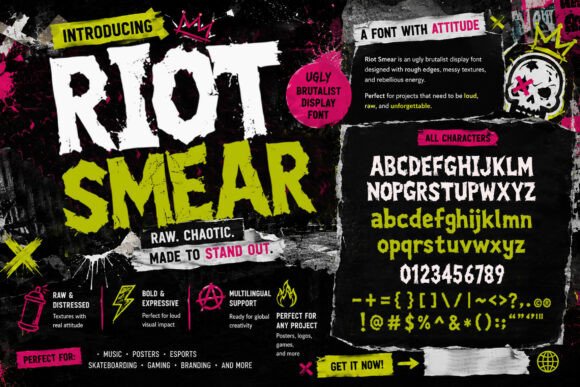
In the vast landscape of digital typography, clarity and legibility often reign supreme. However, there are specific moments in design where perfection is the enemy of impact. When a project demands raw energy, unfiltered emotion, or a deliberate rejection of corporate polish, standard sans-serifs fall short. This is where Riot Smear enters the conversation. As a bold, ugly brutalist display font characterized by rough handmade textures and chaotic cuts, it serves as a specialized tool for designers who need to communicate rebellion and urban authenticity.
Understanding how to leverage such a distinct typeface requires more than just installing the file; it requires a shift in design philosophy. This guide explores the practical application of Riot Smear, helping creators, business owners, and marketers determine when this rebellious aesthetic adds value and when it might detract from the user experience.
Defining the Brutalist Aesthetic in Modern Design
To use Riot Smear effectively, one must first understand the design movement it represents. Brutalism in graphic design is not about beauty in the traditional sense; it is about honesty, structure, and confrontation. It strips away decoration to reveal the raw mechanics of the layout. Riot Smear embodies this through its imperfect forms and aggressive presence.
Unlike distressed fonts that simply overlay a grunge texture on clean letterforms, Riot Smear integrates chaos into the vector structure itself. The "smear" aspect suggests motion, decay, and human error, while the "riot" aspect implies urgency and volume. This combination creates a visual tension that grabs attention immediately. For professionals, recognizing this distinction is vital. You are not choosing this font because it looks "cool"; you are choosing it because it communicates a specific narrative of disruption that polished typography cannot convey.
Core Characteristics and Technical Features
When evaluating Riot Smear for a project, consider its specific anatomical features. These characteristics dictate how the font behaves in a layout and what technical adjustments may be necessary during the design process.
- Handmade Textures: The edges of each glyph are irregular and organic. This prevents the sterile look of digital rendering and adds a tactile quality that resonates with audiences seeking authenticity.
- Chaotic Cuts: Letters feature abrupt angles and broken strokes. This fragmentation forces the viewer’s eye to actively reconstruct the word, increasing engagement time and visual retention.
- Heavy Weight Distribution: As a display font, Riot Smear is inherently bold. It occupies significant negative space and demands high contrast against backgrounds to maintain readability.
- Urban Energy: The stylistic choices mimic street art, zine culture, and industrial signage, grounding digital projects in a physical, real-world context.
These features make Riot Smear a powerhouse for headlines, but they also impose strict limitations. The intricate details can be lost at small sizes, and the heavy weight can overwhelm delicate layouts. Understanding these traits helps prevent common misuse.
Strategic Applications Across Industries
Riot Smear is not a universal solution; it is a niche instrument. Its value lies in its ability to signal subcultural alignment and emotional intensity. Below are practical scenarios where this typeface excels.
Music Promotion and Event Branding
The music industry, particularly genres like punk, metal, industrial, and experimental electronic, relies heavily on visual dissonance to match auditory intensity. Riot Smear works exceptionally well for concert posters, album covers, and festival lineups. In these contexts, the font’s illegibility at the margins becomes a feature rather than a bug, signaling to the audience that the event will be an immersive, non-conformist experience. When designing for music, pair Riot Smear with stark photography or abstract shapes to amplify the chaotic atmosphere without creating visual mud.
Esports and Gaming Visuals
Gaming culture often embraces aggression, speed, and futuristic dystopia. Riot Smear fits naturally into UI elements for competitive gaming, stream overlays, and tournament branding. Its rough texture contrasts sharply with the sleek, neon-lit aesthetics common in cyberpunk or post-apocalyptic game genres. For esports teams, using this font in logos or jersey designs communicates a gritty, underdog mentality that resonates with fans. However, ensure that critical information like player stats or match times remains in a highly legible secondary font to preserve functionality.
Skate Culture and Streetwear
Authenticity is the currency of skate and streetwear brands. Consumers in this demographic are adept at spotting artificial marketing. Riot Smear’s handmade, imperfect quality mirrors the DIY ethos of skateboarding and zine culture. It is ideal for limited-edition apparel drops, skateboard deck graphics, and pop-up shop signage. The font suggests that the brand is rooted in the community rather than manufactured in a boardroom. When applied to merchandise, the bold weight ensures visibility from a distance, which is crucial for street-level marketing.
Expressive Editorial and Activism
For publications, blogs, or campaigns focused on social justice, political commentary, or avant-garde art, Riot Smear provides a visual voice for dissent. It transforms headlines into statements. In editorial design, use it sparingly to highlight pull quotes or section breaks. The font carries enough emotional weight that overusing it dilutes the message. Let the content breathe around the typography to maximize its confrontational impact.
Evaluating Suitability: When to Avoid Riot Smear
Just as important as knowing when to use Riot Smear is knowing when to reject it. Misapplying brutalist typography can alienate users and obscure essential information. Consider the following constraints before implementation.
- Body Text and Long-Form Content: Never use Riot Smear for paragraphs, captions, or navigation menus. The chaotic cuts and heavy texture cause significant eye strain over extended reading periods. Reserve it strictly for display purposes (headlines, logos, short phrases).
- Corporate and Financial Sectors: Unless the brand is intentionally repositioning itself as a disruptor, this font undermines trust in industries requiring stability, precision, and professionalism. Law firms, healthcare providers, and luxury goods typically require cleaner typographic solutions.
- Accessibility Requirements: The irregular forms and low internal contrast of brutalist fonts can pose challenges for users with dyslexia or visual impairments. Always test Riot Smear against WCAG guidelines and provide accessible alternatives where necessary.
- Small Scale Reproduction: On business cards, mobile app icons, or embroidered patches, the fine details of the smear texture may fill in or disappear entirely. If the primary application is small-scale, opt for a simplified version or a different typeface altogether.
Pairing and Layout Best Practices
Riot Smear is a loud protagonist that needs a quiet supporting cast. Successful integration depends entirely on typographic hierarchy and pairing.
Contrast is Key: Pair Riot Smear with neutral, geometric sans-serifs or monospaced fonts. The cleanliness of a font like Helvetica, Inter, or Roboto Mono provides a stable grid that anchors the chaos of Riot Smear. This juxtaposition enhances the readability of both elements and creates a sophisticated, intentional design system.
Embrace Negative Space: Do not crowd Riot Smear. Give it generous margins and padding. The font’s energy expands outward, and cramping it against other elements creates visual noise rather than impact. Treat each headline as a graphic element in its own right.
Color and Texture Interaction: High contrast is non-negotiable. White Riot Smear on black, or vice versa, delivers maximum punch. Be cautious when placing it over busy photographs; the texture of the font can clash with the texture of the image, reducing legibility. Use solid color blocks or duotone treatments to create separation.
Making the Final Decision
Selecting Riot Smear is a strategic decision that signals a departure from convention. It tells your audience that your brand or project values expression over perfection and energy over order. Before committing, ask yourself three questions: Does my audience value authenticity over polish? Is the primary goal to grab attention or convey detailed information? Am I prepared to support this bold choice with a restrained, functional layout system?
If the answer to these questions aligns with the strengths of brutalist design, Riot Smear can transform a generic project into a memorable cultural artifact. It is more than just a collection of glyphs; it is a visual attitude. Used with intention and restraint, it empowers creators to break through the noise of the digital age and leave a lasting, tangible impression. Remember that in the world of expressive typography, the most effective choice is not always the prettiest one—it is the one that speaks the truth of the project most loudly.