Evaluating Goofy Comic: A Practical Guide to Playful Display Typography
Selecting the right typeface for a creative project often involves balancing aesthetic appeal with functional clarity. For designers seeking to inject personality into stickers, apparel, or editorial covers, Goofy Comic presents itself as a daringly delightful display option. Unlike standard sans-serifs or traditional serifs that prioritize neutrality, this typeface is engineered specifically to uplift artwork through a cheery and vibrant persona. It serves as a specialized tool in a designer's arsenal, best understood not as a universal solution, but as a targeted resource for projects requiring high-energy visual communication.
Understanding where Goofy Comic fits within the broader typographic landscape requires looking beyond its name. While it falls under the umbrella of novelty or cartoon fonts, its construction suggests a focus on legibility alongside whimsy. This distinction is crucial for professionals evaluating whether it can transition from simple gag graphics to more substantial design work like book covers or branded merchandise. The following analysis explores the practical applications, comparative advantages, and necessary tradeoffs of integrating this typeface into professional workflows.
Defining the Visual Character and Technical Fit
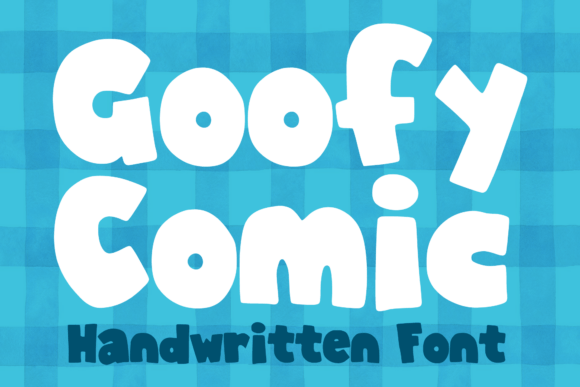
Goofy Comic is categorized as a display typeface, meaning it is optimized for large sizes rather than extended reading. Its primary function is to metamorphose commonplace designs into visually dazzling showpieces by acting as the focal point of a composition. The letterforms exhibit a hand-drawn quality that mimics animated sketches and comic book lettering, yet they maintain enough structural consistency to avoid looking amateurish. This balance allows the font to retain an enchanting flair without sacrificing the polish required for commercial printing or digital publishing.
When evaluating this typeface against generic free alternatives found on open-source repositories, several distinctions emerge. Many entry-level cartoon fonts suffer from poor kerning, inconsistent baseline alignment, or limited character sets. Goofy Comic distinguishes itself by offering a cohesive set of glyphs that work harmoniously together. This technical reliability reduces the time spent manually adjusting spacing in vector software, making it a more efficient choice for designers working under tight deadlines. However, users must recognize that its distinct personality is also its primary constraint; it dictates the tone of the entire piece, leaving little room for subtle interpretation.
Ideal Use Cases and Application Scenarios
The versatility of Goofy Comic is best realized when matched with appropriate mediums. Based on current design trends and typographic hierarchy principles, this typeface excels in specific contexts:
- Sticker and Decal Design: The bold, rounded forms remain legible at small physical scales and cut cleanly on vinyl plotters. The playful weight ensures the text stands out against colorful backgrounds without requiring excessive outlining.
- Apparel and Merchandise: T-shirt graphics benefit from the font’s inherent energy. It pairs well with illustrative elements, creating a unified retro-modern aesthetic that appeals to niche markets and pop-culture enthusiasts.
- Editorial Headlines: For magazine or zine covers focusing on humor, youth culture, or entertainment, Goofy Comic provides an arresting title treatment. It signals content tone instantly, differentiating the publication from serious news or academic journals.
- Branding for Niche Audiences: Logos for pet brands, children’s products, or gaming channels can leverage the font’s approachable vibe. It communicates friendliness and accessibility more effectively than geometric corporate typefaces.
In these scenarios, the font does not merely display text; it actively contributes to the narrative. The "panache" mentioned in product descriptions translates practically to increased engagement in visual-first environments where emotional resonance drives user interaction.
Comparative Analysis: Goofy Comic vs. Alternatives
To make an informed decision, designers must weigh Goofy Comic against other stylistic categories. No single typeface solves every problem, and understanding the opportunity cost of choosing this style is essential for strategic design.
Versus Traditional Hand-Lettering
Custom hand-lettering offers ultimate uniqueness but comes with significant time investment and inconsistency risks. Goofy Comic serves as a middle ground, providing the organic feel of bespoke art with the uniformity of a digital font. While it lacks the one-of-a-kind authenticity of true hand-drawn type, it offers scalability and editability that custom lettering cannot match. For projects with iterative revisions or multiple deliverables (e.g., a social media campaign requiring ten variations), the font is objectively more practical than starting from scratch each time.
Versus Geometric Sans-Serif Display Fonts
Geometric display fonts (like Futura Extra Bold or similar modernist options) offer impact through precision and weight. They are versatile and timeless but can sometimes feel cold or overly corporate. Goofy Comic trades that neutrality for warmth and specificity. If the design goal is institutional trust or minimalist elegance, Goofy Comic is likely the wrong choice. However, if the objective is to disrupt visual monotony or create an emotional connection through nostalgia and fun, it outperforms sterile geometric alternatives.
Versus Other Novelty Typefaces
The market is saturated with decorative fonts. When comparing Goofy Comic to peers in the novelty category, evaluate the following decision factors:
- Legibility at Scale: Does the decoration interfere with reading? Goofy Comic generally maintains clear counter spaces, whereas some competitors over-embellish to the point of illegibility.
- Licensing Flexibility: Professional use requires clear commercial licensing. Ensure the specific version of Goofy Comic you are evaluating permits the intended end-use (e.g., embedding in apps vs. static print).
- Language Support: Check for extended Latin or multilingual glyph coverage if your project targets international audiences. Many novelty fonts are English-only, which limits their utility in global campaigns.
Tradeoffs and Limitations to Consider
Adopting a highly stylized typeface like Goofy Comic involves accepting certain limitations. Recognizing these constraints upfront prevents costly redesigns later in the production process.
Hierarchy Challenges: Because the font carries so much visual weight, it dominates any layout. Using it for subheads or secondary information often creates competition with the main headline. Best practice dictates using Goofy Comic exclusively for primary display elements and pairing it with a clean, neutral sans-serif or simple slab serif for body copy and supporting text. Attempting to use it for paragraphs will result in fatigue and poor readability.
Tone Lock-In: The font’s cheerful persona is absolute. It is difficult to make Goofy Comic look serious, luxurious, or somber. If a brand needs flexibility to pivot between humorous and earnest messaging, this typeface may be too restrictive as a primary brand asset. It works better as a secondary or seasonal font rather than a cornerstone identity element for diverse organizations.
Reproduction Sensitivity: While designed for display, intricate details in playful fonts can sometimes fill in during low-quality printing or appear pixelated on low-resolution screens. Always test Goofy Comic at the smallest intended reproduction size before finalizing files. What looks crisp on a 4K monitor may lose definition on a cheap promotional pen or a distant billboard.
Making the Final Selection Decision
Ultimately, the decision to use Goofy Comic should be driven by project objectives rather than trend adherence. It is the right choice when the brief explicitly calls for invigoration, delight, or a departure from conventional aesthetics. It is particularly valuable for designers who need to achieve a hand-crafted look without the associated production timeline.
Conversely, readers should explore alternative options if their project demands subtlety, extensive text density, or cross-contextual versatility. In such cases, the very attributes that make Goofy Comic special become liabilities. By treating this typeface as a specialized instrument rather than a default setting, designers can harness its extraordinary panache effectively. Whether embellishing stickers or fashioning noteworthy covers, success lies in respecting the font’s boundaries while exploiting its unique capacity to transform the ordinary into the visually dazzling.
For those still evaluating, consider creating a mood board that includes Goofy Comic alongside two contrasting alternatives. Mock up a real headline from your project in all three. Often, seeing the typeface in context reveals nuances that spec sheets cannot convey. This empirical approach ensures that the final selection supports both the artistic vision and the practical requirements of the deliverable.