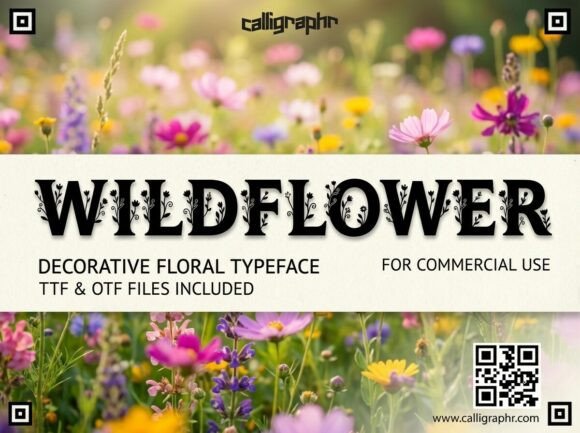
Wildflower: Botanical Slab-Serif Typography
There is a distinct challenge in designing for organic brands: balancing the rugged authenticity of nature with the polished legibility required for commercial packaging. You want the warmth of a sun-drenched meadow, but you also need a typeface that holds its own on a crowded shelf or a digital feed. This is precisely where Wildflower bridges the gap between artistic expression and functional design. It is not merely a decorative font; it is a structural solution for creators who need to communicate natural serenity without sacrificing visual stability.
Wildflower operates as a heavy slab-serif display typeface at its core, providing the architectural confidence necessary for headlines and logos. However, unlike traditional industrial slab serifs, this capital typeface integrates delicate, hand-drawn botanical illustrations directly into the letterforms. The result is a seamless blend of structured typography and organic artistry. For designers, marketers, and business owners in the artisanal space, this eliminates the need to manually illustrate vines or flowers around standard text. The romance and vibrancy are baked into the font itself, streamlining the creative workflow while ensuring a cohesive aesthetic.
The Architecture of Organic Negative Space
What sets Wildflower apart from other floral scripts or novelty fonts is its reliance on negative space and structural integrity. Many decorative typefaces suffer from poor readability because the ornamentation overwhelms the character shape. In contrast, Wildflower uses robust stems as the primary vertical and horizontal strokes. The curling leaves, growing vines, and wildflower silhouettes bloom within the character walls rather than obscuring them.
This design choice serves a dual purpose. Aesthetically, it creates an authentic cottagecore feel that feels grown rather than pasted on. Practically, it maintains the high contrast and bold weight needed for effective communication. When you set a headline in Wildflower, the eye recognizes the letterform first and the botanical detail second. This hierarchy is crucial for branding, where instant recognition must precede emotional appreciation. The elegant negative-space patterns ensure that even at smaller display sizes, the letters remain distinct and the intricate details do not turn into visual noise.
Strategic Applications in Artisanal Branding
For entrepreneurs and brand strategists, selecting a typeface is an exercise in positioning. Wildflower acts as a strategic centerpiece for specific market niches where trust, purity, and craftsmanship are paramount. Its utility extends far beyond simple decoration; it signals category relevance to consumers instantly.
- Botanical Skincare and Apothecary Packaging: In the clean beauty sector, packaging must convey safety and natural origin. Wildflower’s heavy weight suggests reliability and established quality, while the floral motifs reinforce the ingredient list. It works exceptionally well on amber glass bottles, textured paper labels, and minimalist boxes where the interplay of shadow and ink adds tactile depth.
- Organic Food and Beverage Labels: For herbal teas, honey jars, or farm-to-table products, generic sans-serifs can feel too clinical, while ornate scripts can feel outdated. Wildflower offers a modern heritage look that appeals to contemporary consumers seeking tradition. The vibrant seasonal color potential allows for flexible palette swaps across product lines while maintaining brand consistency.
- Romantic Wedding Stationery: Wedding designers often struggle to find typography that feels romantic yet substantial. This typeface provides the necessary gravitas for invitation suites, seating charts, and welcome signs. It pairs beautifully with fine art photography and linen textures, anchoring ephemeral floral arrangements with typographic permanence.
- Eco-Friendly Product Design: Sustainability messaging requires a tone that is gentle but firm. The sturdy slab-serif foundation of Wildflower communicates durability and commitment, avoiding the flimsy appearance that sometimes plagues eco-design. It validates the premium nature of sustainable goods through confident visual language.
Enhancing Digital Engagement and Editorial Layouts
While Wildflower shines in print and packaging, its application in digital environments requires thoughtful implementation. For bloggers, publishers, and content creators focusing on lifestyle, gardening, or wellness, this typeface serves as a powerful engagement tool for headers and pull quotes. It breaks the monotony of body text and creates natural pause points for readers scanning long-form content.
In editorial layouts, use Wildflower to establish a thematic anchor. Because it is a capital-only typeface, it commands attention best when used sparingly. Consider using it for section dividers, drop caps (scaled appropriately), or feature titles in magazines and online articles. The hand-drawn quality translates surprisingly well to screens, adding a human touch to digital interfaces that often feel sterile. However, always test rendering across devices; the intricate vine work needs sufficient pixel density to remain crisp on mobile displays.
Practical Considerations for Implementation
To maximize the effectiveness of Wildflower, designers must respect its specific constraints and strengths. Treating it like a standard text font will lead to legibility issues and diluted impact. Here are practical guidelines for professional implementation:
- Respect the All-Caps Nature: Since this is a capital typeface, avoid forcing lowercase conversions or mixing it with lowercase companions in the same word. Use it exclusively for uppercase settings. Pair it with a clean, neutral sans-serif or a refined serif for body copy to create necessary contrast.
- Mind the Tracking: Decorative slab serifs with internal detailing often require slightly looser tracking than standard fonts. Tight kerning can cause the internal vines and leaves to collide visually, creating muddy shapes. Give each letter room to breathe so the negative-space patterns remain visible.
- Color and Background Contrast: The intricate details of Wildflower demand high contrast. Dark ink on light paper or white text on deep green backgrounds works best. Avoid placing this typeface over busy photographic backgrounds without a solid overlay or drop shadow, as the fine botanical lines will disappear into the image texture.
- Hierarchy Management: Let Wildflower be the hero. Do not compete with it by using other highly decorative elements nearby. If your header is set in Wildflower, keep subheads and supporting graphics minimal. The font carries enough visual weight and narrative detail to stand alone as the primary stylistic element.
Evaluating Fit for Your Creative Project
Before licensing or deploying Wildflower, assess whether your project truly benefits from its specific duality. If your brand voice is ultra-modern, tech-forward, or strictly corporate, this typeface may introduce unwanted whimsy. However, if your goal is to evoke the feeling of a slow morning in a garden, the tactile sensation of handmade paper, or the honest labor of small-batch production, it is an invaluable asset.
Consider the longevity of the design as well. While "cottagecore" is a current trend, the underlying structure of Wildflower is rooted in classic slab-serif traditions. This gives it a timeless quality that transcends fleeting social media aesthetics. By anchoring your visual identity in this blend of architectural stability and natural beauty, you create a brand presence that feels both of-the-moment and enduring. Whether you are designing a label for a new apothecary line or titling a summer editorial spread, Wildflower offers a sophisticated, efficient path to achieving that elusive sun-drenched romance with professional precision.