Jack the Mouse: Integrating Authentic Graffiti Typography into Modern Design
In the vast landscape of digital typography, finding a display font that balances raw artistic expression with professional legibility is a persistent challenge for designers. While many typefaces attempt to mimic street art, they often fall into the trap of appearing sterile or overly caricatured. Jack the Mouse emerges as a significant solution to this problem, offering a bold graffiti display font built specifically for maximum attitude without sacrificing structural integrity. For creators, business owners, and visual artists seeking to inject urban energy into their projects, understanding the nuances of this typeface is essential for effective application.
This article explores the functional characteristics, practical applications, and strategic considerations of using Jack the Mouse. Rather than viewing it merely as a decorative element, we examine how its specific design features—rhythmic flow, texture, and weight—serve distinct communication goals in modern branding and editorial design.
Deconstructing the Visual Anatomy
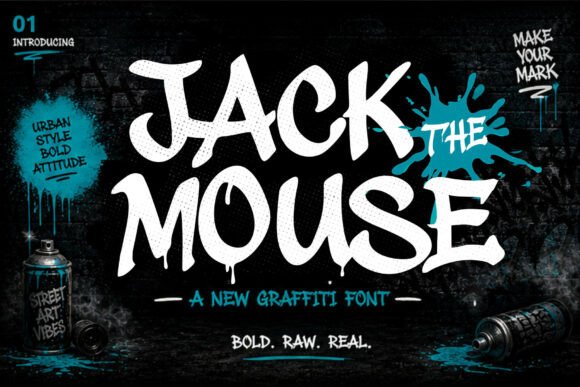
To use Jack the Mouse effectively, one must first understand what distinguishes it from standard novelty fonts. Its value lies in a combination of three core anatomical features that replicate the physical reality of spray paint and marker tags.
Rhythmic Hand-Tag Flow
Authentic graffiti is defined by motion. Unlike static block letters, hand-tagging relies on the momentum of the writer’s arm. Jack the Mouse captures this rhythmic hand-tag flow through connected ligatures and varying baseline shifts. When setting text in this typeface, the letters do not sit rigidly on a line; they interact dynamically. This characteristic is crucial for designers because it eliminates the need for manual kerning adjustments to create a natural look. The font does the heavy lifting, providing a sense of speed and human touch that geometric sans-serifs cannot achieve.
Gritty Internal Texture
One of the most sophisticated aspects of Jack the Mouse is its internal detailing. Many graffiti fonts are solid vectors with smooth edges, which can look artificial against high-resolution photography or textured backgrounds. This typeface incorporates a gritty, stippled internal texture that mimics the overspray and uneven ink distribution of real-world markers. This texture serves a dual purpose:
- Visual Integration: It allows the type to blend seamlessly with grainy film stocks, concrete textures, or distressed paper backgrounds.
- Perceived Authenticity: The imperfection signals to the viewer that the design has a handcrafted origin, fostering a deeper emotional connection than polished corporate typography.
Solid Visual Weight and Paint Drips
Legibility in display typography often suffers when stylistic elements become too dominant. Jack the Mouse maintains a solid visual weight that ensures readability even at smaller display sizes. The paint-drip accents are present but controlled; they add vertical rhythm without obscuring the letterforms. This balance makes the font approachable rather than aggressive, allowing it to function in commercial contexts where pure vandalism aesthetics might be alienating.
Strategic Applications Across Industries
The versatility of Jack the Mouse extends beyond traditional street art posters. Its unique blend of sophistication and grit makes it suitable for various professional sectors. Below are practical scenarios where this typeface delivers measurable value.
Modern Streetwear Branding
In the fashion industry, typography acts as a primary signifier of subcultural alignment. Streetwear consumers are highly literate in visual codes and can quickly identify inauthentic branding. Using Jack the Mouse for garment tags, hoodie chest prints, or campaign headers signals a genuine respect for skate and hip-hop culture. The font’s heavy stance works exceptionally well on dark fabrics, where the stippled texture prevents the white ink from looking like a flat digital sticker. Designers should utilize the all-caps setting for brand names to maximize impact, while reserving mixed-case variations for secondary messaging to maintain hierarchy.
Edgy Editorial and Magazine Headers
Editorial designers often struggle to pair expressive display fonts with body copy. Jack the Mouse provides enough structural stability to serve as a masthead or section divider without overwhelming the page layout. Its rhythmic flow creates a strong horizontal line that guides the reader’s eye across the spread. When used in cultural magazines, music journals, or art zines, it bridges the gap between underground content and professional publishing standards. The key here is contrast; pair it with a clean, neutral grotesque or serif for body text to let the header breathe.
High-Impact Social Media Content
Social media feeds are saturated with minimalist, safe typography. To stop the scroll, content requires immediate visual friction. Jack the Mouse offers the necessary disruption. For Instagram carousels, TikTok thumbnails, or YouTube covers, the font’s bold personality communicates the video or post's tone instantly. The authentic paint-drip accents remain visible even when scaled down for mobile screens, ensuring the aesthetic intent survives compression algorithms. Creators benefit from this typeface because it reduces the time spent on custom lettering while delivering a bespoke appearance.
Evaluating Suitability: Strengths and Limitations
While Jack the Mouse is a powerful tool, it is not a universal solution. Professional design requires knowing when not to use a typeface. Evaluating its strengths against potential limitations ensures successful project outcomes.
Where It Excels
- Headlines and Titles: Designed for large-scale display, it shines when given ample negative space.
- Cultural Contexts: Ideal for skate parks, music festivals, urban tourism boards, and youth-oriented nonprofits.
- Multimedia Overlays: The texture holds up well against video footage and complex photographic backgrounds.
Practical Considerations and Constraints
Designers must be mindful of accessibility and readability. Due to its expressive nature and internal texture, Jack the Mouse should never be used for long-form body text, navigation menus, or critical legal disclaimers. The stippling that adds character at 72pt becomes visual noise at 12pt. Furthermore, while the font conveys "attitude," it may not align with industries requiring sterility or extreme formality, such as medical, financial, or luxury heritage brands. In these contexts, the gritty texture could inadvertently signal unprofessionalism rather than creativity.
Additionally, consider color contrast carefully. The internal texture reduces the overall ink density compared to a solid fill. When placing light-colored Jack the Mouse text on a light background, ensure sufficient contrast ratios are met for accessibility compliance. Testing on multiple devices is recommended, as screen rendering can sometimes soften the stippled details.
Technical Implementation Tips
To maximize the effectiveness of Jack the Mouse in your workflow, consider the following technical guidance:
- Kerning Awareness: Although the font features rhythmic connections, tight tracking can cause the drip accents to collide awkwardly. Default tracking is usually optimal; avoid tightening unless necessary for specific layout constraints.
- Layering Techniques: Enhance the depth by duplicating the text layer. Use a solid version underneath as a shadow or outline, and place the textured Jack the Mouse layer on top. This increases legibility on busy backgrounds while retaining the handcrafted feel.
- Vector vs. Raster: Whenever possible, keep the typeface as live text or vector outlines. Rasterizing at low resolutions will destroy the subtle stipple texture, reducing it to mere pixelation. If working in Photoshop, use Smart Objects to preserve scalability.
The Value of Handcrafted Character in Digital Spaces
Ultimately, the choice to use Jack the Mouse is a strategic decision about brand voice. In an era dominated by AI-generated imagery and template-based design, audiences crave evidence of human intervention. This typeface delivers a sense of handcrafted power and unyielding creative character that automated tools cannot replicate.
By incorporating Jack the Mouse, designers are not just selecting a font; they are adopting a visual language rooted in resilience, expression, and community. Whether applied to a limited-edition sneaker drop, a documentary title sequence, or a local skate shop flyer, the typeface carries a legendary personality that resonates with viewers on a visceral level. It transforms standard messaging into an unforgettable mark, proving that even in digital environments, the raw energy of the street remains a vital force in contemporary visual communication.
For professionals and creators evaluating their typographic toolkit, Jack the Mouse represents more than a stylistic trend. It is a functional asset for projects demanding authenticity. By respecting its anatomical features and applying it within appropriate contexts, you ensure that your visual identity speaks with authority, rhythm, and genuine urban soul.