Light Up the Night with Agapanthus: Elevating Seasonal Design Through High-Fidelity Typography
In the competitive landscape of seasonal marketing and creative design, capturing attention requires more than just standard festive imagery. It demands a synthesis of nostalgia, technical precision, and atmospheric storytelling. Enter Agapanthus, a spectacular Halloween-themed display font that brings the magic of the Jack-o'-lantern to life in ways that traditional typefaces simply cannot. As professionals, creators, and marketers navigate an increasingly saturated visual market, tools like Agapanthus represent a shift toward hyper-specialized assets that serve as foundational branding elements rather than mere decorative afterthoughts.
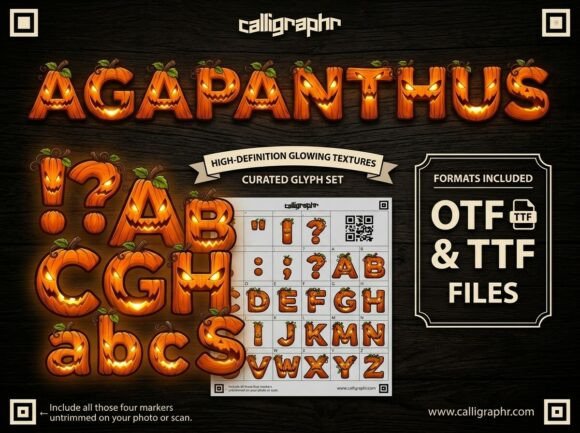
This typeface is not merely a collection of letters; it is a curated glyph set where each character is expertly crafted with high-definition glowing textures. Featuring carved pumpkin faces that peer out with a wicked, luminous grin, Agapanthus bridges the gap between illustrative art and functional typography. For entrepreneurs and freelancers tasked with delivering standout campaigns, understanding the utility and market relevance of such specialized assets is essential for creating work that resonates on both an aesthetic and commercial level.
Redefining Seasonal Typography in the Digital Age
The design industry has long grappled with the "novelty font" stigma. Historically, holiday-specific typefaces were often low-resolution, kitschy, or difficult to read at scale. However, consumer expectations have evolved alongside display technology. With the prevalence of 4K screens, high-DPI mobile devices, and large-format digital signage, audiences now expect seasonal graphics to possess the same fidelity as luxury brand assets. Agapanthus responds directly to this demand by offering realistic wood-grain pumpkin skin and flickering interior light effects embedded within the vector data itself.
This evolution reflects a broader trend in experiential design. Modern consumers do not just want to see a Halloween announcement; they want to feel the ambiance of the event before they even arrive. By integrating texture and lighting directly into the letterforms, designers can bypass the need for complex post-production rendering. The result is a workflow that is both faster and more visually cohesive, allowing the typography to carry the emotional weight of the campaign without relying entirely on background photography or 3D renders.
The Intersection of Nostalgia and High-Definition Craft
Why are creatives paying attention to Agapanthus right now? The answer lies in the current cultural appetite for "elevated nostalgia." While retro aesthetics remain popular, there is a distinct fatigue regarding low-effort throwbacks. Today’s market rewards designs that honor traditional motifs—like the classic Jack-o'-lantern—but execute them with contemporary craftsmanship. Agapanthus embodies this duality. It feels like a hand-carved masterpiece, evoking the tactile memory of autumn traditions, yet it is rendered with a digital sharpness that suits modern media consumption.
For marketers, this distinction is critical. A font that looks pixelated or amateurish can inadvertently signal a low-budget event or product. Conversely, a typeface that balances whimsy with professional polish suggests a premium experience. Whether used for a high-end haunted house attraction or a boutique bakery’s seasonal menu, the high-definition glowing textures of Agapanthus communicate quality assurance through visual language alone.
Practical Applications Across Creative Verticals
The versatility of Agapanthus extends beyond simple headlines. Its design architecture makes it uniquely suited for specific business and creative applications where atmosphere and legibility must coexist. Understanding these use cases allows professionals to maximize their return on investment when licensing specialized assets.
- Event Branding and Wayfinding: For haunted attractions and festivals, consistency is key. Agapanthus provides a complete alphabet and punctuation set, ensuring that everything from the main entrance sign to directional markers maintains a unified eerie charm. The built-in luminosity ensures readability against dark backgrounds, which is a common pain point in night-time event design.
- Social Media Content Creation: In the scroll-heavy environment of Instagram and TikTok, static graphics must compete with video. The flickering interior light effect inherent in the glyphs creates a sense of motion and depth even in still images. This intrinsic visual interest can improve engagement rates by stopping the scroll without requiring resource-intensive animation.
- Merchandise and Print Collateral: Seasonal merchandise is a significant revenue stream for many creators. Because Agapanthus features realistic textures and shading baked into the font, it reduces the prepress workload for screen printers and DTG services. The detailed wood-grain and glow effects translate beautifully to apparel, mugs, and posters, reducing the need for separate illustration layers.
- Digital Advertising: Display ads often suffer from banner blindness. Using a typeface that functions as both text and image helps break standard grid patterns. The wicked, luminous grins of the characters act as focal points, drawing the eye to the message while reinforcing the thematic context instantly.
Adapting to Changing Workflow Expectations
The relevance of Agapanthus also ties into shifting professional workflows. Freelancers and agency teams are under constant pressure to deliver high-impact visuals with tighter turnarounds. The era of spending hours manually texturing type or applying layer styles to achieve a specific glow is fading. Smart assets that provide "instant atmosphere" are becoming indispensable.
By utilizing a font where the aesthetic heavy lifting is already done, designers can focus on layout, hierarchy, and copy strategy. This efficiency does not come at the cost of uniqueness; rather, it reallocates creative energy toward strategic differentiation. Furthermore, as remote collaboration becomes standard, using self-contained assets like Agapanthus ensures that the intended visual effect remains consistent across different team members' machines, eliminating issues with missing brushes, plugins, or incompatible layer styles.
Strategic Considerations for Implementation
While Agapanthus is a powerful tool, its effectiveness depends on strategic application. As with any high-character display font, it demands restraint and contextual awareness. Professionals should consider the following best practices to ensure the typeface enhances rather than overwhelms the project.
- Prioritize Hierarchy: Given the intricate detail of the carved pumpkin faces and glowing textures, Agapanthus is best reserved for primary headlines, logos, and short callouts. Pairing it with a clean, neutral sans-serif or a textured serif for body copy ensures that the information remains accessible while the display font handles the atmospheric branding.
- Mind the Negative Space: The luminous nature of the glyphs requires adequate breathing room. Crowding the letters or placing them against busy, high-contrast photographic backgrounds can diminish the glow effect and reduce legibility. Dark, solid, or subtly graded backgrounds typically yield the best results, allowing the "flickering interior light" to truly pop.
- Leverage the Complete Glyph Set: Many novelty fonts lack comprehensive punctuation or numerals, forcing designers to mix mismatched typefaces. Agapanthus offers a complete set, which is vital for professional pricing displays, dates, and URLs. Utilizing the full set maintains immersion and prevents the jarring visual disconnect that occurs when switching fonts mid-design.
- Test Across Mediums: Always preview the font at the intended output size. What looks stunning on a 27-inch monitor may lose its subtle wood-grain texture on a small mobile screen or a distant billboard. Adjust tracking and sizing based on the final delivery format to preserve the integrity of the hand-carved aesthetic.
The Future of Thematic Design Assets
Agapanthus represents more than just a successful Halloween font; it signals a maturation in the marketplace for thematic design assets. We are moving away from generic, one-size-fits-all holiday clip art toward bespoke, high-fidelity typographic systems that respect the intelligence and aesthetic standards of modern audiences. For businesses and creators, investing in such assets is an investment in brand perception.
As we look forward, the integration of atmospheric qualities directly into functional design elements will likely accelerate. Consumers are seeking authenticity and immersion in every touchpoint, from digital ads to physical packaging. Tools that facilitate this connection without sacrificing professional utility will remain at the forefront of creative toolkits. By choosing to light up the night with Agapanthus, designers are not just making a seasonal statement; they are aligning themselves with a forward-looking approach to visual communication that values craft, context, and undeniable impact.
Ultimately, the goal of any seasonal campaign is to create a memorable emotional imprint. Agapanthus facilitates this by transforming standard text into a sensory experience. It reminds us that even in the age of AI generation and automated design, there is irreplaceable value in expertly crafted, human-centric artistry. For the professional creator, it is a reminder that the right tool doesn't just solve a layout problem—it ignites the imagination and ensures your headlines glow with an eerie, unforgettable charm that lingers long after the season ends.