Jamun: Weaving Intrigue Through Geometric Spiderweb Typography
In the vast ecosystem of digital typography, display fonts often fall into two distinct categories: those that prioritize legibility above all else, and those that serve as pure graphical elements. Rarely does a typeface successfully bridge this divide while maintaining a cohesive thematic narrative. Jamun achieves this balance by functioning simultaneously as a readable letterform and an intricate illustration. It is not merely a font; it is a textural experience that spins a web of intrigue through bold, geometric shapes filled with rhythmic spiderweb patterns. For designers, marketers, and creators seeking to evoke a specific mood without relying on external imagery, understanding the mechanics and applications of Jamun is essential for executing high-impact visual communication.
The Anatomy of Eerie Legibility
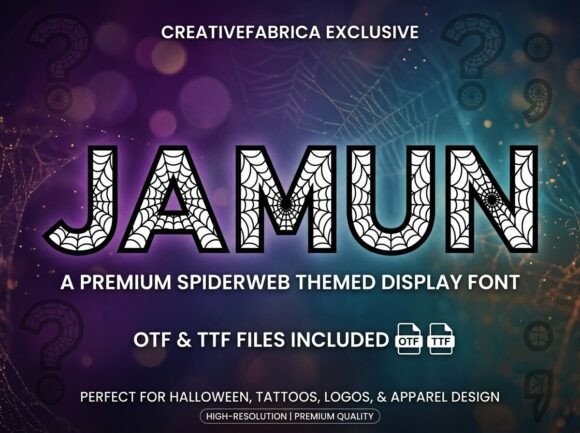
To utilize Jamun effectively, one must first understand its construction. Unlike distressed or grunge fonts that achieve atmosphere through erosion and chaos, Jamun relies on precision. The foundation of the typeface is a clean, high-contrast white outline. This structural decision is critical for search engine optimization in visual contexts and for practical design application. The white outline acts as a containment field, separating the dense internal texture from whatever background color or image lies beneath. Without this boundary, the intricate spiderweb fill would visually bleed into complex backgrounds, rendering the text illegible at smaller sizes or against busy photography.
The interior of each glyph features a dense tapestry of rhythmic patterns. These are not random scratches; they are calculated geometric repetitions that mimic the radial symmetry of arachnid silk. This intentionality gives Jamun its "spooky-and-intricate soul." The pattern density creates a mid-tone gray value when viewed from a distance, while up close, the viewer engages with the micro-details of the webbing. This dual-layer perception allows the font to function as both headline copy and decorative texture. Designers should note that because the detail is so fine, Jamun requires careful handling regarding scaling and output resolution to maintain the crispness of the internal geometry.
Strategic Applications in Niche Branding
Jamun’s distinct personality makes it unsuitable for body copy or corporate annual reports, but it excels in environments where emotional resonance drives engagement. Its primary utility lies in sectors that benefit from dark aesthetics, mystery, and artisanal craftsmanship.
Independent Halloween and Seasonal Campaigns
Halloween branding often suffers from cliché. Standard horror fonts can feel derivative or overly aggressive. Jamun offers a sophisticated alternative for independent businesses, pop-up events, and seasonal product lines. Because the font is geometric rather than organic or dripping, it reads as modern and stylized rather than traditionally gory. This makes it appropriate for high-end costume boutiques, autumn festivals, and craft breweries releasing seasonal stouts. The font conveys the holiday spirit through texture and association rather than literal iconography, allowing brands to signal "Halloween" without using pumpkins or bats in their logo lockups.
Tattoo Parlor Identities and Alternative Art
The tattoo industry has long embraced ornamental complexity. Jamun aligns naturally with the aesthetic of blackwork, dotwork, and ornamental tattoo styles. For shop signage, business cards, and portfolio websites, the typeface mirrors the artistry found on skin. The spiderweb motif carries cultural weight within tattoo history, symbolizing patience, creation, and sometimes entrapment. By utilizing Jamun, a studio communicates an appreciation for line work and detail before a client even sees a needle. It serves as a typographic extension of the artist's hand, reinforcing brand identity through stylistic consistency between the medium and the message.
Dark Fantasy Publishing and Editorial Design
Book covers in the dark fantasy and gothic horror genres must compete in thumbnail-sized marketplaces. Titles need to be readable at 50 pixels wide while still promising a rich narrative. Jamun’s bold geometric letterforms provide the necessary mass for title hierarchy, while the internal webbing suggests the complexity of the story within. Art directors can use this typeface to differentiate titles from standard serif fantasies. The high-contrast outline ensures the title pops against dark, moody cover paintings, solving a common contrast issue in genre fiction design. Furthermore, the font’s unique character aids in discoverability; readers scanning for new releases are drawn to distinctive typographic treatments that promise a fresh reading experience.
Technical Considerations for Digital and Print Implementation
While Jamun is aesthetically striking, its complexity demands technical mindfulness. Treating it like a standard sans-serif will lead to production failures. Professionals must adhere to specific workflows to preserve the integrity of the spiderweb details.
- Resolution and Scaling: The internal webbing consists of fine lines that can disappear if rendered too small. In print, Jamun should generally not be used below 24pt size. For web and social media, ensure assets are exported at 2x resolution or as SVG vectors to prevent anti-aliasing artifacts from muddying the pattern.
- Contrast Management: Although the white outline provides separation, the font performs best against solid dark colors or gradients. Placing Jamun over a photograph with similar mid-tone values to the webbing can cause vibration. Always test the font against the intended background at the final viewing size.
- Kerning and Spacing: Due to the visual weight of the internal patterns, Jamun can appear heavier than its bounding box suggests. Increased tracking (letter-spacing) is often beneficial to allow the negative space between letters to breathe, preventing the webs from merging into an indistinguishable mass.
- Pairing Strategies: Jamun is a soloist, not a choir member. Pair it exclusively with clean, minimalist sans-serifs or simple serifs for subheads and body text. Avoid pairing it with other decorative or textured fonts, as this creates visual competition and reduces overall readability.
Social Media Impact and Header Optimization
In the attention economy of social media, headers and profile banners serve as prime real estate for brand signaling. Jamun is specifically engineered for these high-impact, low-dwell-time environments. When used in YouTube channel art, Twitch overlays, or Instagram bio graphics, the font stops the scroll through sheer graphic weight.
The "wicked-and-wonderful" quality of Jamun translates exceptionally well to algorithmic feeds where users scan rapidly. The brain processes the bold geometric shape first, registering the word, and then lingers on the intricate detail. This micro-moment of engagement can increase time-on-image metrics. For content creators in the true crime, paranormal, gaming, or alternative fashion niches, Jamun acts as an immediate genre signifier. It tells the audience exactly what kind of content to expect before they read a single caption. However, creators must ensure that platform compression does not destroy the fine lines. Using PNG formats with transparency or vector-based design tools like Canva or Figma helps mitigate compression artifacts that plague JPEG uploads.
Evaluating Return on Investment for Display Type
Selecting a specialized display font like Jamun is a strategic investment. For business owners and creative directors, the value proposition extends beyond aesthetics. A unique typeface contributes to trademark distinctiveness. In crowded markets, owning a specific typographic voice aids in brand recall. When customers associate the spiderweb geometry of Jamun with a specific tattoo shop or horror publisher, the font becomes a proprietary asset in the consumer's mind.
Furthermore, Jamun reduces the need for supplementary illustration. In many design projects, budget and time are spent creating custom textures or icons to support the headline. With Jamun, the headline is the illustration. This efficiency streamlines the design workflow, allowing resources to be allocated elsewhere. For educators and researchers studying visual culture, Jamun also represents a fascinating case study in semantic typography—where the form of the letter directly reinforces the meaning of the word. It demonstrates how contemporary type design continues to evolve beyond mere information transmission into the realm of emotional storytelling.
Navigating Tone and Audience Appropriateness
Despite its versatility within niche markets, Jamun is not a universal tool. Understanding when not to use it is as important as knowing when to apply it. The font carries an inherent tension and darkness that may be inappropriate for family-oriented events, medical communications, or financial services. Even within the horror genre, there is a distinction between playful spookiness and genuine dread. Jamun leans toward the latter, possessing an eerie personality that commands respect rather than amusement.
Designers must also consider accessibility. While the white outline aids legibility, the internal texture reduces the effective contrast ratio of the letterform. For ADA compliance and inclusive design, Jamun should never be used for functional navigation, buttons, or essential informational text. It is strictly a decorative element for headlines and short phrases. Ensuring that vital information remains accessible in a standard, high-contrast font preserves the user experience while allowing Jamun to perform its atmospheric role safely.
Ultimately, Jamun represents a convergence of graphic design, illustration, and typographic tradition. It offers a tangible solution for creators who need to communicate mystery, intricacy, and boldness simultaneously. By respecting its technical constraints and leveraging its unique semantic properties, professionals can spin a web of intrigue that captivates audiences and elevates brand identities across digital and physical mediums. Whether etched into a storefront window, printed on a paperback spine, or glowing on a smartphone screen, Jamun transforms ordinary text into an unforgettable visual encounter.