Integrating Playful Dreaming into Professional Design Workflows
Selecting the right typeface is rarely just about aesthetics; it is a strategic decision that influences brand perception, readability, and production efficiency. Playful Dreaming occupies a specific niche in the modern typographic landscape as a high-impact display font that bridges the gap between whimsical artistry and structural discipline. For designers, marketers, and content creators, understanding how to implement this typeface effectively requires moving beyond simple installation and considering its role within a broader creative ecosystem. Its bold, condensed structure combined with artistic ligatures offers a distinct visual voice, but leveraging that voice successfully depends on intentional planning and technical proficiency.
Defining the Role of Playful Dreaming in Visual Hierarchy
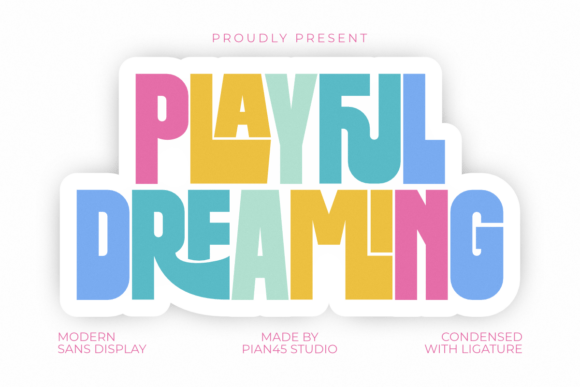
Before opening design software, it is essential to define where Playful Dreaming fits within your project’s typographic hierarchy. This typeface is engineered for impact, making it unsuitable for body copy or extended reading. Instead, it functions best as a primary headline element or a focal point in packaging and branding. The tall, thick characters command attention, while the unique letter connections add a layer of custom craftsmanship that typically requires hand-lettering to achieve.
In a practical workflow, treat Playful Dreaming as an accent instrument rather than the entire orchestra. When planning a children’s book layout or a social media campaign, pair it with a clean, neutral sans-serif or a highly legible serif for supporting text. This contrast ensures that the playful nature of the display font enhances rather than overwhelms the message. The condensed width of the glyphs allows for larger point sizes without consuming excessive horizontal space, which is particularly valuable for mobile-first designs and product packaging where real estate is limited.
Pre-Production Planning and Asset Management
Efficient integration begins before the design phase. Because Playful Dreaming relies heavily on ligatures and alternate characters to achieve its intended aesthetic, proper file management is crucial. Ensure you are working with the complete OpenType (OTF) files rather than basic TrueType versions to access the full range of stylistic sets. Missing these assets often leads to disjointed letter spacing that undermines the font's professional quality.
- Verify Licensing: Confirm that your license covers all intended mediums, including web embedding, apparel printing, and digital advertising. Commercial use cases often require different tiers than personal projects.
- Test Ligature Rendering: Not all software handles complex OpenType features identically. Test the font in your primary applications (Adobe Illustrator, Figma, Canva, or Procreate) to ensure ligatures activate automatically or can be accessed via glyph panels.
- Create Style Guides: If using Playful Dreaming for a brand identity, document specific usage rules. Define minimum sizes, approved color pairings, and prohibited modifications to maintain consistency across different team members and vendors.
Technical Implementation During the Creative Process
The distinctive character of Playful Dreaming emerges during the active design phase. The font’s artistic ligatures are designed to create fluid connections between specific letter pairs, mimicking the organic flow of hand-drawn typography. However, relying solely on default settings may result in missed opportunities for customization. Professional execution involves actively engaging with the Glyphs panel or OpenType features to select alternates that best fit the specific word shape and composition.
When designing logos or titles, avoid forcing ligatures where they create awkward negative space. The bold, condensed structure means that kerning adjustments must be handled with care. While the font includes built-in metrics, optical adjustments are often necessary when scaling up for large-format printing or down for digital thumbnails. In vector-based workflows like Adobe Illustrator, consider outlining the text only after all edits are finalized. This preserves editability during the revision process while allowing for node-level refinement of the ligature curves if a bespoke modification is required for a specific brand mark.
Workflow Compatibility Across Platforms
Cross-platform consistency is a common pain point when using specialized display fonts. Playful Dreaming performs robustly in professional desktop publishing environments, but behavior can vary in web and app interfaces. For digital marketing materials and websites, utilize variable font technology if available, or generate static web fonts that preserve the ligature data. When collaborating with clients or printers who may not have the font installed, always embed the typeface in PDF proofs or convert headlines to outlines in final print files to prevent substitution errors.
For social media creators working in tools like Canva or CapCut, verify that the platform supports custom font uploads and OpenType features. If ligatures do not render automatically in these simplified environments, you may need to design the headline in external software and import it as a transparent PNG or SVG. This extra step ensures the artistic integrity of Playful Dreaming remains intact regardless of the end-user platform.
Application-Specific Strategies for Maximum Impact
Different use cases demand different implementation strategies. Understanding the nuances of each medium helps prevent common pitfalls associated with bold display typefaces.
- Children’s Book Titles and Editorial: Prioritize legibility alongside whimsy. While the artistic ligatures are charming, ensure that young readers or parents can instantly recognize the title. Use Playful Dreaming for the main title and chapter headers, but revert to simpler typefaces for subtitles and metadata to maintain clear information architecture.
- Packaging and Apparel: Consider the physical substrate. The thick strokes of Playful Dreaming hold up well on textured papers and fabrics, but fine details in ligatures may be lost in embroidery or low-resolution screen printing. Always request a physical proof or stitch-out test before mass production. On packaging, leverage the condensed width to maximize shelf presence without increasing package dimensions.
- Social Media Headlines: Design for the feed. High-contrast color combinations work best with this font’s bold weight. Ensure sufficient padding around the text, as the tight condensing can make headlines feel cramped against image edges. Create reusable templates with pre-set OpenType preferences to streamline batch content creation.
- Modern Branding and Logos: Treat the typeface as a starting point, not a finished product. Customize specific letters to create proprietary brand assets. The artistic ligatures provide a foundation of playfulness, but modifying terminals or adjusting stroke weights can transform a retail font into a unique trademark.
Quality Control and Long-Term Maintenance
After implementation, quality assurance ensures the typeface continues to perform as intended. Review designs at multiple scales to verify that the bold condensed structure remains legible and that ligatures do not create unintended visual artifacts. In digital contexts, test across various browsers and devices to confirm consistent rendering. For print projects, check ink spread on uncoated stocks, as the thick strokes may bleed slightly, altering the perceived weight and ligature clarity.
Maintain organized asset libraries with clear versioning. As updates to Playful Dreaming are released, evaluate whether new glyphs or improved metrics warrant updating existing brand templates. Document any custom modifications made to the typeface in your brand guidelines to ensure future designers can replicate or adapt the work accurately. This systematic approach transforms a decorative font choice into a sustainable, scalable design system component.
Ultimately, Playful Dreaming succeeds when it is treated as a functional tool within a disciplined workflow. Its blend of bold structure and artistic flair solves specific communication challenges—adding warmth to corporate brands, excitement to educational materials, and distinction to commercial products. By integrating thoughtful planning, technical precision, and context-aware application, creators can harness its full potential while maintaining the professional standards required for successful project delivery. The result is design work that feels both effortlessly creative and intentionally crafted, resonating with audiences through typography that balances imagination with clarity.