Evaluating Stay Trendy Font for Retro Design Projects
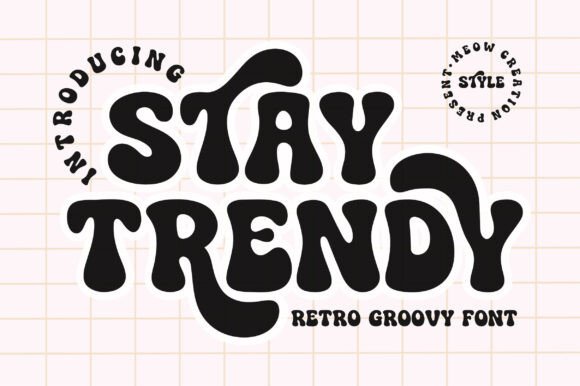
Selecting the appropriate typeface is a critical decision in graphic design, particularly when aiming to evoke a specific era without sacrificing contemporary readability. Stay Trendy presents itself as a bold and playful retro groovy font inspired by iconic 70s aesthetics. For designers, marketers, and content creators evaluating this typeface, understanding its functional characteristics beyond its visual appeal is essential. This assessment explores the practical applications, technical considerations, and strategic fit of Stay Trendy to help determine if it aligns with specific project goals.
Defining the Aesthetic and Functional Profile
Stay Trendy is categorized as a display typeface, meaning it is engineered primarily for headlines, logos, and short-form text rather than extended reading. Its design language is rooted in the soft, organic geometry characteristic of 1970s typography. Unlike the sharp serifs of earlier decades or the rigid sans-serifs of modern minimalism, this font utilizes chunky shapes, smooth curves, and softened edges. These attributes create a visual texture that feels nostalgic yet retains a polished, modern finish.
From a functional perspective, the weight distribution in Stay Trendy is substantial. The thick strokes provide high visibility at larger sizes, making it effective for capturing attention in crowded visual environments like social media feeds or retail displays. However, this same weight dictates its limitations. The generous x-height and open counters contribute to legibility in display settings, but the decorative nature of the letterforms requires careful management regarding spacing and hierarchy.
Strategic Applications and Use Cases
Evaluating whether Stay Trendy is the right tool involves matching its personality to the intended medium. The typeface excels in contexts where emotional resonance and visual impact take precedence over information density.
- Apparel and Merchandise: The chunky proportions of Stay Trendy translate exceptionally well to screen printing and embroidery. On t-shirts and tote bags, the bold lines maintain integrity during production processes that might degrade thinner fonts. The retro vibe aligns naturally with current fashion trends favoring vintage aesthetics.
- Social Media Graphics: In digital environments where users scroll quickly, typefaces must be instantly recognizable. Stay Trendy’s distinctive silhouette allows keywords to stand out in thumbnails, stories, and carousel posts. The playful tone supports engagement-driven content, such as quotes, announcements, and lifestyle branding.
- Poster and Event Branding: For music festivals, art shows, or pop-up markets, this font communicates a specific cultural signifier. It suggests an atmosphere that is relaxed, creative, and historically aware. The soft edges prevent the design from feeling aggressive, maintaining an inviting tone even at large scales.
- Packaging Design: Products targeting demographics interested in nostalgia, wellness, or artisanal quality often benefit from this typographic style. The humanist qualities of the curves can make commercial products feel more approachable and handcrafted.
Technical Considerations and File Formats
A crucial factor in the evaluation process is technical compatibility and feature access. While Stay Trendy may be available in standard formats, leveraging its full design potential requires specific attention to file types. For full access to stylistic alternates, glyphs, and ligatures, it is recommended to install and use the OTF (OpenType Format) file.
Standard TTF or web-safe versions may lack these advanced typographic features. OpenType support allows designers to customize the flow of text, preventing repetitive letterforms that can occur in all-caps settings or specific character combinations. Ligatures connect characters smoothly, enhancing the "groovy" aesthetic, while alternates provide variation that keeps dynamic layouts from appearing static. If a project relies heavily on custom lettering or unique logotypes, verifying OTF support in your design software (such as Adobe Illustrator, Affinity Designer, or Canva) is a necessary prerequisite before licensing.
Tradeoffs and Limitations
No typeface is universally applicable, and Stay Trendy has distinct boundaries. Understanding these tradeoffs prevents misuse and ensures professional results.
Legibility at Small Sizes
Due to its heavy weight and decorative details, Stay Trendy loses clarity when scaled down. It is not suitable for body copy, captions, disclaimers, or interface text. Attempting to use this font below 18–24 points (depending on output resolution) will likely result in ink bleed in print or pixelation on screens. Designers must pair it with a clean, neutral sans-serif or serif for supporting text to maintain information hierarchy.
Tonal Specificity
The strong 70s association is both a feature and a constraint. While perfect for retro-themed projects, it may clash with corporate, luxury, technological, or serious institutional branding. Using Stay Trendy in a context requiring neutrality or authority could undermine the message. It is inherently informal and expressive; if the brand voice is reserved or clinical, this typeface introduces cognitive dissonance.
Spacing Requirements
Retro display fonts often require manual kerning adjustments. The default metrics may not account for every pairing, especially when utilizing alternates. Budgeting extra time for typographic refinement is necessary to avoid awkward gaps or collisions that detract from the polished look.
Comparing Alternatives
When deciding whether to proceed with Stay Trendy, it is helpful to compare it against adjacent options based on specific project needs:
- If readability is paramount: Consider a geometric sans-serif with softer terminals (e.g., Poppins or Quicksand). These offer a friendly, modern feel without the heavy retro baggage, allowing for greater versatility across body and headline text.
- If a stricter vintage accuracy is needed: Authentic 70s revivals or Cooper Black alternatives may provide historical precision. Stay Trendy offers a modernized interpretation; if the goal is archival reproduction rather than contemporary homage, a different classification may be superior.
- If a more delicate aesthetic is required: High-contrast serifs or script fonts can evoke the same era with less visual mass. Stay Trendy is assertive; projects needing subtlety or elegance should look toward lighter-weight retro options.
Making the Final Selection
The decision to utilize Stay Trendy should be driven by alignment between the font’s inherent traits and the project’s communication objectives. It is a strong candidate when the goal is to inject warmth, playfulness, and nostalgic recognition into a design. Its chunky, smooth construction makes it highly effective for merchandise, social media, and display headers where immediate visual impact is the metric of success.
However, evaluators must confirm technical readiness. Ensuring access to the OTF file is not merely a suggestion but a functional requirement for professional-grade customization. Furthermore, successful implementation depends on disciplined pairing with complementary typefaces and respecting size limitations. By weighing these practical factors against aesthetic preferences, designers can confidently determine if Stay Trendy serves as the optimal typographic foundation for their work or if an alternative better satisfies the project's constraints.