Moon Mama: Evaluating a Whimsical Display Font for Creative Projects
Selecting the appropriate typeface is a foundational decision in graphic design, particularly when the project targets a specific emotional response or demographic. Moon Mama presents itself as a distinct option within the display font category, characterized by a vivid, handwritten aesthetic that prioritizes energy and approachability. For designers, marketers, and content creators evaluating typography options, understanding the functional applications and limitations of this font is essential. This analysis explores where Moon Mama fits within a broader typographic strategy, helping professionals determine if its specific characteristics align with current project requirements.
Defining the Visual Characteristics of Moon Mama
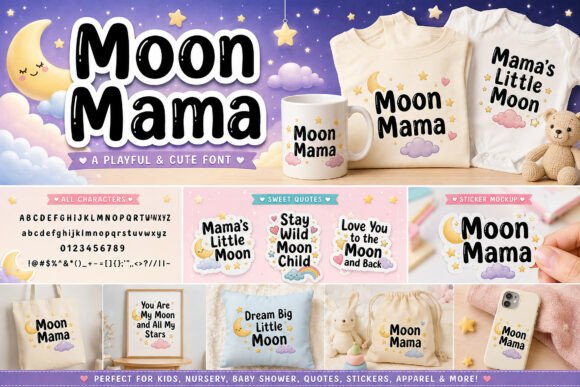
Moon Mama is classified as a display font, meaning it is engineered primarily for headlines, logos, and short bursts of text rather than extended reading. Its visual identity is rooted in a handwritten style that mimics organic penmanship while maintaining digital consistency. The letterforms feature soft curves and irregular baselines, creating a sense of movement and spontaneity. Unlike rigid geometric sans-serifs or traditional serifs, this typeface introduces a "homemade" quality that suggests craftsmanship and personal attention.
The font’s personality is inherently lively and whimsical. It avoids sharp angles in favor of rounded terminals and open counters, which contributes to a friendly and non-threatening appearance. This stylistic choice makes it visually distinct from more corporate or minimalist display fonts. When evaluating Moon Mama, it is important to recognize that its primary function is atmospheric; it sets a tone of joy, sweetness, and modern charm before the viewer even processes the semantic meaning of the words.
Ideal Use Cases and Strategic Fit
Evaluating whether Moon Mama is the right tool requires matching its attributes to specific design goals. Based on its visual profile, this typeface demonstrates strong performance in several key areas:
- Children-Oriented Design: The rounded, playful nature of the font aligns naturally with products and media intended for younger audiences. It works effectively for book covers, educational materials, toy packaging, and children’s apparel branding where approachability is paramount.
- Spirited Branding and Logos: For brands aiming to project creativity, warmth, or artisanal quality, Moon Mama offers a unique alternative to standard script fonts. It is suitable for bakeries, craft businesses, parenting blogs, and lifestyle brands that wish to avoid sterile corporate aesthetics.
- Social Media and Digital Graphics: In the crowded landscape of social feeds, high-contrast, expressive typography captures attention. Moon Mama’s vivacious style performs well in Instagram stories, Pinterest pins, and YouTube thumbnails where quick visual impact is necessary.
- Packaging and Merchandise: The font’s texture translates well to physical goods. It adds character to sticker designs, greeting cards, invitation suites, and product labels, enhancing the perceived value through bespoke typography.
In these contexts, Moon Mama serves as an active design element that reinforces brand messaging. It is not merely a vessel for text but a contributor to the overall user experience and emotional connection.
Benefits of Choosing a Handwritten Display Font
Opting for a typeface like Moon Mama provides tangible benefits for projects requiring humanization. In an era dominated by AI-generated content and ultra-clean minimalism, handwritten fonts offer a counterbalance that feels authentic and grounded. The "quirks" inherent in Moon Mama’s design break the monotony of perfect grids, making layouts feel more dynamic and less manufactured.
Furthermore, this style of typography can improve engagement in specific niches. Research in consumer psychology suggests that rounded, informal typefaces are often associated with friendliness and safety. For businesses in the care, education, or family sectors, utilizing such typography can subtly lower psychological barriers and foster trust. From a practical standpoint, Moon Mama’s distinctive silhouette also aids in brand recall; it is far more memorable than a generic system font, helping visual assets stand out in competitive marketplaces.
Tradeoffs and Practical Considerations
While Moon Mama excels in specific domains, objective evaluation requires acknowledging its limitations. Understanding these tradeoffs prevents misuse and ensures professional results.
Legibility and Hierarchy
As with most decorative display fonts, legibility decreases significantly at smaller sizes. Moon Mama should be restricted to large-scale applications. Using it for body copy, fine print, or complex data tables will result in poor readability and user frustration. Designers must pair it with a highly legible sans-serif or serif typeface to establish proper typographic hierarchy. The supporting font should be neutral enough to let Moon Mama shine without competing for attention.
Tone Limitations
The whimsical nature of Moon Mama makes it unsuitable for industries requiring gravitas, authority, or luxury. Financial institutions, legal firms, medical facilities, and high-end fashion brands typically require typography that conveys stability and precision. Applying a playful handwritten font in these contexts could undermine credibility or create tonal dissonance. It is crucial to assess whether the target audience expects playfulness or professionalism before selection.
Technical Implementation
Handwritten fonts often have unique metrics regarding kerning and line height. Designers should expect to spend additional time adjusting spacing manually to ensure the text looks cohesive. Additionally, when using Moon Mama across multiple platforms (web, print, video), licensing compliance must be verified. Ensuring the correct license for commercial use, web embedding, or app integration is a critical step in the evaluation process to avoid legal complications.
Comparing Alternatives and Making the Final Decision
When deciding whether to implement Moon Mama, it is helpful to compare it against adjacent categories. If a project needs handwriting but requires more elegance and less playfulness, a calligraphy-based script might be superior. Conversely, if the goal is informality without the decorative flourishes, a casual sans-serif or rounded grotesque may offer better versatility and readability.
The decision ultimately rests on the specific communication objectives of the project. Moon Mama is a strong candidate if the primary KPI is emotional engagement, brand differentiation through warmth, or appealing to a youth-centric demographic. It is a weaker candidate if the priority is information density, corporate authority, or cross-platform uniformity.
Designers should test Moon Mama in context before committing. Create mockups at actual size, view them on intended devices, and gather feedback from representative users. Does the font enhance the message, or does it distract from it? Does it align with the brand voice guidelines? By treating typography selection as a strategic evaluation rather than a purely aesthetic preference, professionals can leverage Moon Mama’s vivacious energy effectively while avoiding common pitfalls associated with decorative typefaces. When aligned correctly with project goals, it transforms standard layouts into inviting, energetic experiences that resonate deeply with the intended audience.