Distressed Asphalt: Strategic Typography for Industrial and Urban Branding
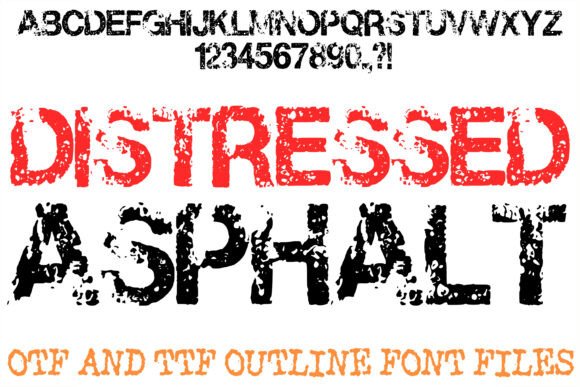
Selecting the right typeface is rarely just an aesthetic decision; it is a fundamental component of brand positioning and communication strategy. For projects requiring a sense of durability, history, or raw industrial capability, standard clean sans-serifs often fail to convey the necessary weight. This is where Distressed Asphalt serves a specific strategic function. As a rugged, industrial display typeface designed to mimic the erosion of real-world road markings, it offers more than texture—it offers immediate semantic signaling. When utilized intentionally, this font bridges the gap between digital design and physical reality, grounding abstract concepts in a tangible, built-to-last aesthetic.
The value of Distressed Asphalt lies in its ability to communicate resilience without verbal explanation. Each character reflects heavy erosion, embedded gravel, and dark aggregate stones, replicating the visual language of infrastructure that has withstood time and traffic. For entrepreneurs, marketers, and designers, understanding when and how to deploy this asset is crucial. It is not a universal solution but a specialized tool best suited for urban streetwear, heavy machinery branding, construction signage, and high-impact digital art. Using it effectively requires moving beyond novelty and treating the typeface as a deliberate element of your broader visual identity system.
Aligning Typography with Brand Positioning Goals
Before integrating Distressed Asphalt into a project, decision-makers must evaluate whether the visual tone aligns with long-term business objectives. Typography acts as a non-verbal cue that sets expectations before a single word is read. If your goal is to position a brand as artisanal, rugged, or deeply connected to urban environments, this typeface supports that narrative efficiently. However, if the objective is to convey clinical precision, luxury minimalism, or technological futurism, the weathered nature of the font may create cognitive dissonance that undermines trust.
Strategic alignment involves assessing the emotional response you intend to elicit from your audience. Distressed Asphalt evokes feelings of authenticity, grit, and permanence. It suggests that a product or service has been tested by real-world conditions. For a construction firm, this reinforces safety and reliability. For a streetwear label, it signals subcultural credibility and anti-establishment values. By mapping these associations against your target demographic’s preferences, you transform a stylistic choice into a calculated branding maneuver. The font becomes a vessel for your value proposition, reinforcing messages of endurance and quality through its very form.
Practical Applications Across Industries
The versatility of Distressed Asphalt allows it to serve distinct functions across various sectors, provided the application is context-aware. Understanding these nuances helps prevent misuse and maximizes impact.
- Heavy Machinery and Industrial Branding: In this sector, legibility and authority are paramount. Use Distressed Asphalt for primary logos or short, impactful taglines rather than technical specifications. The texture implies that the equipment is built for harsh environments, visually validating performance claims.
- Urban Streetwear and Apparel: Fashion relies heavily on storytelling. Here, the font can be used more liberally on garment tags, chest prints, or campaign headers. The distressed quality adds perceived value by suggesting vintage authenticity or handmade craftsmanship, distinguishing the line from mass-produced fast fashion.
- Construction and Safety Signage: While regulatory signage must adhere to strict standards, internal site branding, safety campaign posters, and company vehicles benefit from this aesthetic. It creates a cohesive visual culture that resonates with workers familiar with the textures of the job site.
- Digital Art and Editorial Design: For bloggers, publishers, and digital artists, Distressed Asphalt works exceptionally well in hero images or pull quotes. It breaks the sterility of digital screens, adding a tactile layer that increases engagement and dwell time by creating visual contrast against clean body text.
Mitigating Risks Through Intentional Implementation
A common pitfall in using textured display fonts is prioritizing style over function. Without clear guidelines, Distressed Asphalt can compromise readability or appear gimmicky. Strategic implementation requires establishing strict parameters for use to ensure the typeface enhances rather than detracts from the user experience.
Legibility Hierarchy: Never use Distressed Asphalt for body copy, captions, or critical informational text. The erosion and aggregate details that make it distinctive at large sizes become visual noise at small scales. Reserve it exclusively for headlines, logos, and short emphasis text. Pair it with a highly legible, neutral sans-serif or monospaced font to handle functional reading tasks. This contrast not only ensures accessibility but also amplifies the impact of the distressed elements by providing negative space and visual relief.
Contextual Scaling: The texture density of Distressed Asphalt is optimized for specific size ranges. Test extensively across all intended mediums. A logo that looks perfectly weathered on a desktop monitor may lose its defining gravel details when scaled down for a mobile favicon or social media avatar. Conversely, printing it too large without adequate resolution can reveal pixelation that looks unintentional rather than artistic. Create multiple locked versions of your typography for different scales to maintain integrity.
Color and Contrast Strategy: Because the font simulates white road paint on dark asphalt, it performs best in high-contrast scenarios. Using low-contrast color combinations can cause the distressed edges to disappear, rendering the text illegible. When designing for print, consider spot varnishes or textured paper stocks that complement the digital distress. In digital environments, ensure WCAG compliance by testing contrast ratios, as the irregular edges can sometimes trick automated accessibility tools.
Planning for Long-Term Visual Consistency
Trends in distressed typography can cycle quickly, but infrastructure-inspired aesthetics have proven longevity because they are rooted in physical reality rather than fleeting fashion. To future-proof your investment in Distressed Asphalt, integrate it into a comprehensive design system rather than treating it as a one-off decorative element.
- Define Usage Rules: Document exactly when and where the font should be applied. Specify minimum sizes, approved color pairings, and forbidden uses (e.g., never use for legal disclaimers or navigation menus).
- Create Asset Variations: Develop pre-set typographic locks and textures derived from the font family. Having ready-made assets prevents designers from improvising inconsistently under deadline pressure.
- Audit Regularly: Schedule periodic reviews of branded materials to ensure the font still aligns with evolving business goals. If your company pivots toward high-tech automation, the rugged aesthetic may need to be dialed back or retired.
- Educate Stakeholders: Ensure everyone from marketing teams to external vendors understands the rationale behind the typeface choice. When stakeholders understand that Distressed Asphalt represents "tested durability" rather than just "cool texture," they are less likely to request inappropriate modifications.
Evaluating Return on Creative Investment
In professional design, every asset must justify its existence through measurable or observable outcomes. When considering Distressed Asphalt, evaluate its potential return through the lens of differentiation and brand recall. In saturated markets like workwear or industrial services, generic typography causes brands to blend together. A distinctive, thematic typeface creates a unique visual fingerprint that aids memory retention.
However, avoid the trap of assuming the font alone will drive results. It is an amplifier, not a generator. If the underlying product quality or service delivery is lacking, the rugged aesthetic may ironically highlight those deficiencies by promising a durability that isn't delivered. The most successful applications occur when the visual language matches operational reality. When there is alignment, Distressed Asphalt reduces the cognitive load required to communicate brand attributes, allowing marketing budgets to focus on distribution rather than explaining basic positioning.
Ultimately, the decision to use Distressed Asphalt should be grounded in a clear understanding of your audience's expectations and your brand's authentic story. It is a powerful instrument for conveying industrial heritage and urban resilience, but like any specialized tool, it demands respect and expertise. By approaching it strategically—prioritizing legibility, maintaining consistency, and aligning with genuine business goals—you transform a stylistic preference into a sustainable competitive advantage. The result is a visual identity that doesn't just look the part but actively participates in building a brand that feels as permanent and reliable as the pavement it emulates.