Luke: Strategic Application of Vintage Neon Aesthetics in Modern Design
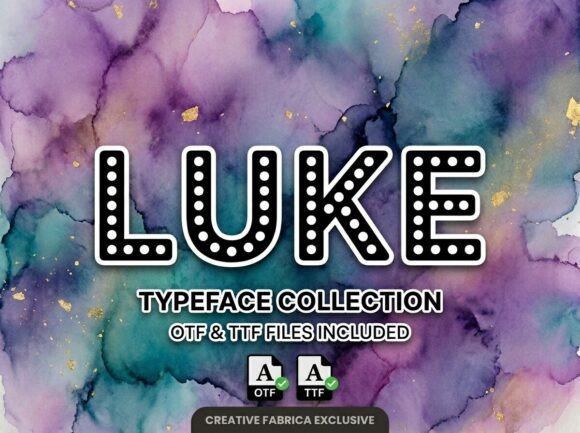
Selecting a typeface is rarely just an aesthetic decision; it is a strategic signal that communicates brand positioning before a single word is read. Luke operates at the intersection of nostalgia and high-impact visibility, offering designers and marketers a tool specifically engineered for attention capture. Inspired by the classic glamour of theater marquees and vintage neon signage, this display typeface features bold, blocky letterforms embedded with a rhythmic pattern of lightbulb dots. This construction creates a dazzling three-dimensional effect that transcends standard typography, functioning more as a graphical element than mere text.
For entrepreneurs, event organizers, and creative directors, understanding the utility of Luke requires looking beyond its retro charm. The font’s value lies in its ability to instantly establish a specific emotional context—excitement, celebration, and premium entertainment. However, because Luke is visually dense and stylistically distinct, it demands intentional application. Using it without a clear communication strategy can lead to visual clutter or brand misalignment. This guide explores how to leverage Luke effectively to support business goals, enhance customer experience, and drive engagement across digital and print mediums.
Defining the Strategic Role of Display Typography
In the hierarchy of visual communication, display typefaces like Luke serve as the headline act. They are not designed for body copy or extended reading; they are designed for immediate recognition and emotional resonance. When planning a campaign or branding initiative, consider Luke as a solution to specific challenges rather than a default stylistic choice.
- Instant Context Setting: The marquee-inspired design immediately signals "event," "entertainment," or "celebration." This reduces the cognitive load for the audience, allowing them to understand the nature of the content before processing the specific message.
- Visual Hierarchy Enforcement: The built-in 3D effect and lightbulb texture create natural contrast against flat backgrounds. This forces the viewer’s eye to the most critical information first, which is essential for posters, social media headers, and hero sections on websites.
- Emotional Priming: Typography carries psychological weight. Luke evokes feelings of nostalgia, optimism, and spectacle. For brands aiming to associate their products or services with positive, high-energy experiences, this font acts as an emotional primer.
Strategically, Luke is best deployed when the primary objective is to stop the scroll or capture attention in a saturated environment. It is less suitable for corporate financial reports or minimalist luxury branding where subtlety is paramount. Recognizing this distinction prevents misuse and ensures the typeface supports, rather than undermines, your broader communication goals.
Optimizing Brand Positioning and Customer Experience
The decision to incorporate Luke into a brand identity should be rooted in long-term positioning. For businesses in the hospitality, entertainment, food and beverage, or lifestyle sectors, this typeface can reinforce a commitment to experiential quality. However, consistency is key to building brand equity.
Aligning Font Choice with Brand Voice
Before integrating Luke into your asset library, audit your current brand voice. Does your messaging align with the boldness and theatricality of the font? If your brand relies on understated elegance or clinical precision, Luke may create cognitive dissonance. Conversely, if your brand promises fun, vibrancy, or memorable experiences, Luke amplifies that promise visually.
Consider the customer journey. If you are designing an invitation for a grand opening, Luke sets an expectation of festivity. The subsequent experience must deliver on that visual promise. Using such a high-energy font for a mundane or disappointing event creates a trust gap. Therefore, the use of Luke should be coordinated with operations and event planning teams to ensure the reality matches the typographic hype.
Digital and Print Implementation Standards
To maintain professionalism while using a decorative font, establish strict usage guidelines. Random application dilutes impact. Instead, define specific touchpoints where Luke is authorized:
- Social Media Headers: Use Luke for profile banners or story highlights to create a cohesive, energetic channel aesthetic.
- Event Signage: Apply the font to physical wayfinding or stage backdrops where legibility at a distance is required alongside thematic consistency.
- Promotional Merchandise: The bold forms translate exceptionally well to embroidery, screen printing, and vinyl decals, maintaining integrity even when scaled down.
By codifying these use cases, you prevent scope creep and ensure that Luke remains a special accent rather than becoming visual noise.
Practical Considerations for Production and Accessibility
While Luke offers significant aesthetic advantages, its complex structure introduces technical considerations that affect productivity and accessibility. Ignoring these factors can result in poor user experience or production failures.
Legibility and Contrast Management
The internal lightbulb pattern adds texture but also reduces the solid mass of the letterform. This makes contrast ratios critical. Always test Luke against intended background colors to ensure WCAG compliance for large text. Dark backgrounds often work best, mimicking the original neon sign context and allowing the "lights" to pop. On white or light backgrounds, the internal dots may vibrate visually or disappear, reducing readability. Strategic color selection is not optional; it is a functional requirement for this specific typeface.
Reproduction Limitations
When planning physical collateral, consult with printers early. The intricate dot pattern may not reproduce well in low-resolution formats or certain textile applications. For small-scale items like business cards, the details of Luke may blur. In these instances, it is strategically wiser to pair Luke with a clean sans-serif for smaller elements, reserving the display font strictly for large-format applications where its details remain crisp. This pairing strategy maintains the excitement of Luke while ensuring operational functionality across all brand assets.
Risk Mitigation and Intentional Decision-Making
Adopting a distinctive typeface carries inherent risks. The most common pitfall is overuse. Because Luke is so expressive, using it for subheads, captions, or secondary information overwhelms the viewer and diminishes the font's power. Treat Luke as a spice, not the main ingredient. Reserve it for the single most important message on any given canvas.
Another risk is trend dependency. Vintage neon aesthetics cycle in and out of fashion. If you build your entire brand identity solely around Luke, you may face expensive rebranding costs when trends shift. To mitigate this, use Luke as a campaign-specific tool or a seasonal accent rather than the foundational logo typeface. This approach allows you to capitalize on current aesthetic preferences while maintaining a flexible, future-proof core identity.
Furthermore, consider the licensing and legal aspects. Ensure you have the appropriate commercial licenses for all intended uses, including web embedding and merchandise. Failing to secure proper rights can lead to legal complications that disrupt business operations. Proper asset management includes tracking where and how Luke is deployed to maintain compliance and organizational efficiency.
Evaluating Long-Term Value and ROI
The return on investment for a premium display typeface like Luke is measured in engagement metrics, brand recall, and conversion rates. Track performance when implementing this font in new campaigns. Do A/B tests comparing Luke headlines against standard sans-serif alternatives. Measure click-through rates on social ads, open rates for email newsletters featuring Luke in the preview text, or foot traffic correlation for event signage.
Data-driven validation moves typography selection from subjective preference to strategic asset management. If Luke consistently outperforms baseline designs in capturing attention and driving action, it justifies its place in your toolkit. If metrics show no improvement or negative feedback, pivot quickly. The goal is always effective communication, not adherence to a specific style.
Ultimately, Luke is a powerful instrument for creators and business leaders who understand that design is a language. Its vibrant, marquee-inspired forms offer a shortcut to conveying excitement and prestige. By approaching its use with strategic intent, technical awareness, and respect for the audience's experience, you transform a decorative font into a reliable driver of business outcomes. Whether lighting up a festival poster or adding sparkle to a product launch, thoughtful application of Luke ensures your message doesn't just get seen—it gets felt.