Mayan: Elevating Visual Identity with Bold Decorative Typography
When a design project demands immediate visual authority, standard sans-serif or serif typefaces often fall short of conveying the necessary emotional weight. Mayan serves as a specialized solution for these high-stakes creative moments. It is not merely a collection of letterforms but a comprehensive decorative display system designed to function as the primary focal point of any layout. For designers, brand strategists, and content creators operating in saturated markets, this typeface offers a distinct pathway to differentiation through its unique artistic elements and commanding presence.
Defining the Aesthetic and Functional Scope
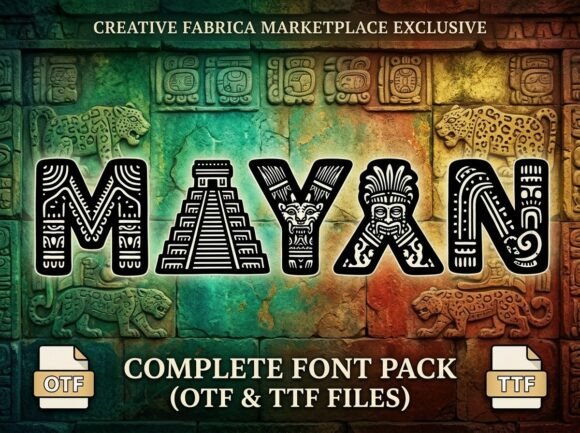
At its core, Mayan is an all-caps uppercase display typeface. This architectural decision is intentional rather than restrictive. By eliminating lowercase characters, the font forces a hierarchy where every letter operates at maximum visual volume. The design features intricate artistic detailing that transforms standard alphabet characters into individual works of art. This makes it fundamentally different from body copy fonts; it is a tool for emphasis, titling, and branding rather than extended reading.
The versatility of Mayan lies in its ability to balance ornate decoration with professional polish. Many decorative fonts sacrifice legibility for style, resulting in designs that look amateurish or difficult to parse. Mayan maintains structural integrity, ensuring that while the letters are visually complex, they remain readable and commercially viable. This duality allows it to bridge the gap between avant-garde art projects and corporate packaging needs, providing a unified aesthetic that feels both custom-crafted and production-ready.
Strategic Applications in Branding and Packaging
The most immediate application for Mayan is in product packaging where shelf impact dictates success. In industries such as craft beverages, artisanal foods, and luxury cosmetics, consumers make split-second decisions based on visual cues. A standard label might communicate information, but a label utilizing Mayan communicates heritage, craftsmanship, and premium value. For example, a hot sauce brand looking to convey authentic heat and cultural depth can utilize this typeface for the product name to instantly signal intensity and tradition without relying on cliché imagery.
Beyond physical products, digital branding benefits significantly from this level of typographic personality. Social media templates, YouTube thumbnails, and podcast cover art operate in environments where users scroll rapidly. Mayan’s strong visual personality acts as a pattern interrupt. When used consistently across a brand’s digital touchpoints, it creates a recognizable visual anchor. Followers begin to associate the specific texture and weight of the letterforms with the content creator’s voice, building brand equity through typography alone.
Event Design and Experiential Marketing
Event planners and wedding designers face the unique challenge of setting a tone before guests even arrive. Invitations, signage, and wayfinding systems set expectations for the experience. Mayan excels in this context because it carries enough decorative weight to replace additional graphic elements. A wedding invitation typeset entirely in Mayan does not require floral borders or watercolor backgrounds to feel special; the text itself provides the ornamentation. Similarly, music festival posters and concert merchandise leverage this bold aesthetic to capture the energy of live performance, translating auditory experiences into visual formats that fans want to wear and display.
Navigating Technical Specifications and File Formats
Understanding the technical delivery of Mayan ensures seamless integration into professional workflows. The font package includes two distinct file formats, each serving specific ecosystem requirements:
- OTF (OpenType Font): This is the preferred format for professional design software like Adobe Illustrator, InDesign, and Affinity Designer. OpenType supports advanced typographic features and typically renders more smoothly in vector-based environments. It is the industry standard for print production and high-resolution branding assets.
- TTF (TrueType Font): While older in architecture, TrueType remains essential for universal compatibility. If you are designing in Microsoft Word, PowerPoint, Canva, or web-based platforms that do not fully support OpenType features, the TTF file ensures the typeface displays correctly. It is also the safer choice for sharing files with clients who may lack professional design software.
Having both formats available eliminates friction during collaboration. A designer can create master assets in OTF while providing editable TTF versions to marketing teams for internal presentations or quick social media updates, maintaining brand consistency across different skill levels and software access.
Critical Considerations Before Implementation
While Mayan is a powerful asset, its specialized nature requires thoughtful application. The most crucial consideration is the all-caps limitation. Because there are no lowercase glyphs, typing in lowercase will either result in capital letters or missing characters depending on the software. This makes Mayan unsuitable for subheads, captions, disclaimers, or any text requiring sentence case. Designers must plan their typographic hierarchy in advance, pairing Mayan with a complementary sans-serif or serif typeface that handles secondary information gracefully.
Readability at small sizes is another practical constraint. Due to the intricate artistic elements within each character, Mayan loses definition when scaled down below a certain threshold. On a business card, it may work beautifully for the company name but become illegible if used for contact details. Testing at actual print size or final screen resolution is mandatory. What looks stunning on a 27-inch monitor may turn into visual noise on a mobile device or a product tag.
Licensing and Commercial Viability
For professionals using Mayan in client work, understanding licensing is as important as understanding aesthetics. Display fonts often have different commercial terms than text fonts. Before committing to a rebrand or product launch, verify that the license covers the intended use case, whether that be digital advertising, physical merchandise, or embedded web usage. Investing in the correct license upfront prevents legal complications and ensures the project remains sustainable long-term.
Maximizing Impact Through Restraint
The effectiveness of Mayan depends heavily on negative space. Because the letterforms are dense and decorative, they require breathing room to be appreciated. Crowding Mayan against other graphical elements or placing it on busy photographic backgrounds diminishes its impact. Successful implementations treat the typeface as an image in its own right, allowing it to dominate the composition without competition.
Color selection also plays a pivotal role. High-contrast combinations tend to showcase the font’s details best. Gold foil on dark matte paper, white knockout text on vibrant gradients, or deep charcoal on cream paper all allow the artistic nuances to emerge. Low-contrast color schemes can obscure the very details that make the font valuable. When in doubt, prioritize clarity over subtlety.
Ultimately, Mayan represents a strategic choice for creators who understand that typography is not neutral. It is a deliberate move away from safe, invisible design toward something that demands engagement. Whether applied to a luxury wine label, a gaming stream overlay, or a boutique hotel sign, it transforms ordinary text into a memorable visual experience. By respecting its technical boundaries and leveraging its strengths in appropriate contexts, designers can unlock new levels of brand distinction and audience connection.