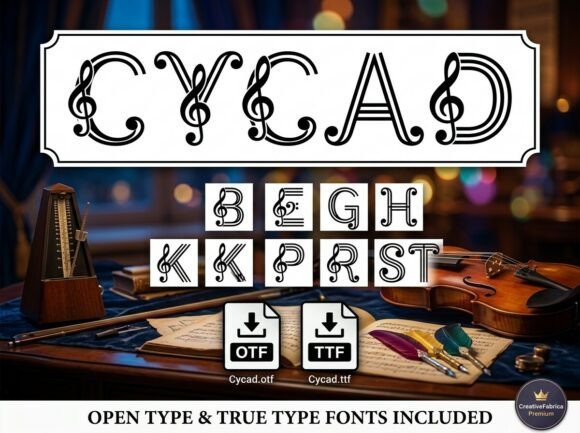
Harmonize Your Designs with Cycad: The Typeface That Sings
In the vast landscape of typographic choices, finding a display font that truly resonates with the auditory nature of music is a rare challenge. Most typefaces designed for musical contexts rely on clichés or lack the structural integrity needed for professional branding. Cycad breaks this mold entirely. It is an elegant display typeface that captures a melodic-and-symphonic soul, offering designers a tool that doesn't just reference music but embodies it through form and structure.
This isn't merely a decorative novelty; it is a sophisticated system of multi-line letterforms characterized by integrated treble clefs and musical staff patterns. For creative directors, orchestra marketers, and independent artists, understanding how to leverage Cycad’s rhythmic, parallel-line construction can transform visual identities from static images into dynamic compositions that feel as timeless as the classical repertoire itself.
The Anatomy of Musical Typography
To use Cycad effectively, one must first understand what makes its construction unique. Unlike standard serif or sans-serif fonts where the stroke is a singular path, Cycad utilizes a multi-line approach. The letters are built from parallel lines that mimic the five-line staff used in Western musical notation. This creates a texture that is inherently rhythmic. When you set a word in Cycad, you aren't just arranging shapes; you are creating a visual cadence.
The integration of treble clefs within the letterforms is handled with remarkable subtlety. Rather than appearing as clip-art overlaid on text, these musical symbols serve as structural anchors for specific characters. This seamless blending ensures that the typeface remains legible at display sizes while retaining its thematic integrity. The result is a font that feels organic rather than forced, making it suitable for high-end applications where sophistication is paramount.
Balancing Legibility and Ornamentation
A common pitfall in thematic typography is the sacrifice of readability for style. Cycad navigates this tension by maintaining consistent x-heights and open counters despite its complex line work. However, because of its intricate details, it demands respect regarding scale. This is strictly a display typeface. It shines in headlines, logos, and large-format posters but will lose its defining characteristics if reduced to body copy sizes. Designers should treat Cycad as the soloist in their typographic orchestra, supported by simpler, more neutral typefaces for supporting text.
Branding Independent Orchestras and Ensembles
For independent orchestras and chamber ensembles, visual identity is often the first point of contact with potential audiences. In an era where digital streaming competes with live performance, your branding must convey the same emotional depth as the music itself. Cycad offers a distinct advantage here. Its timeless grace signals tradition and quality, while its precise geometric construction suggests modern professionalism.
Consider the application of Cycad in a season brochure or a concert program cover. The parallel-line construction creates natural horizontal movement across the page, guiding the viewer’s eye much like a conductor guides an ensemble. When paired with high-contrast photography or minimalist color palettes, the typeface becomes the primary graphical element, reducing the need for excessive illustration or ornamentation. This efficiency is particularly valuable for smaller organizations with limited design budgets.
- Logotypes: Use Cycad for the organization's name to establish immediate genre recognition.
- Season Themes: Create a cohesive visual thread across multiple concerts by using the typeface for all event titles.
- Ticket Design: Elevate the perceived value of physical tickets, turning them into keepsakes rather than disposable receipts.
Elevating Classical Concert Posters
Poster design for classical music requires a delicate balance between historical reverence and contemporary appeal. A poster that looks too antique may alienate younger audiences, while one that is too trendy may undermine the gravity of the repertoire. Cycad sits perfectly in this sweet spot. Its symphonic soul pays homage to the art form's history, yet its clean, vector-based aesthetic feels entirely current.
When designing concert posters, consider the negative space around the Cycad lettering. Because the font contains internal white space between its parallel lines, it interacts beautifully with background colors and textures. Dark backgrounds tend to make the "staff lines" of the letters pop, creating a luminous effect ideal for evening performances. Conversely, light backgrounds emphasize the inked lines, offering a crisp, academic look suitable for matinees or educational events.
Pairing Strategies for Maximum Impact
Cycad commands attention, so your pairing choices should be deliberate. Avoid other decorative or script fonts, as they will compete for dominance and create visual noise. Instead, opt for:
- Geometric Sans-Serifs: Fonts like Futura or Avant Garde complement Cycad’s constructed nature without mimicking it.
- Transitional Serifs: Typefaces such as Baskerville or Caslon provide a traditional counterpoint that grounds the experimental nature of Cycad.
- Monospaced Fonts: For a modern, avant-garde classical look, pairing Cycad with a monospace font creates an intriguing tension between fluid melody and rigid structure.
Digital Presence and Social Media Headers
In the digital realm, attention spans are fleeting. Music academies, festivals, and artists need social media headers that communicate their niche instantly. Cycad excels in this high-impact environment. Its distinctive silhouette is recognizable even at thumbnail sizes, making it an excellent choice for YouTube banners, Facebook covers, and Instagram story highlights.
However, digital application requires technical consideration. Ensure that you are exporting Cycad at sufficient resolution to prevent aliasing on the fine parallel lines. On screens, these lines can sometimes moiré or blur if not rendered correctly. Testing across multiple devices is essential. Additionally, when animating text for video content, Cycad’s linear structure lends itself to reveal animations that mimic the drawing of a staff or the scrolling of sheet music, adding another layer of sensory harmony to your content.
Practical Considerations for Adoption
Before integrating Cycad into your next project, there are practical factors to weigh. While its aesthetic is undeniable, its specificity means it is not a universal solution. It is purpose-built for lyrical-and-refined contexts. Using it for a jazz festival might work if the vibe is cool and structured, but using it for a rock band or a corporate financial report would likely create cognitive dissonance.
Licensing and accessibility are also key considerations. As with any specialized display font, ensure your license covers all intended mediums, particularly if you are producing merchandise or large-scale environmental signage. From an accessibility standpoint, always remember that Cycad should never be used for essential information like dates, times, or venue addresses. Its complexity makes it difficult for screen readers and users with visual impairments to parse quickly. Reserve Cycad for atmospheric and titular elements, and use highly legible, accessible typefaces for functional data.
The Emotional Resonance of Type
Ultimately, choosing Cycad is a decision about emotional resonance. Typography is the voice of your design before a single word is read. When the subject matter is music, that voice needs to carry pitch, tone, and timbre. Cycad provides a vocabulary for expressing the invisible architecture of sound. It allows designers to harmonize their visual output with the auditory experience they are promoting.
Whether you are rebranding a century-old symphony hall or launching a new series of intimate recitals, Cycad offers a level of thematic cohesion that generic fonts simply cannot achieve. It transforms text into texture, words into rhythm, and design into a performance. By understanding its strengths and respecting its limitations, you can create visual experiences that sing with the same clarity and passion as the music they represent.