Drain Font: Ethereal Winged Motifs for Visual Storytelling
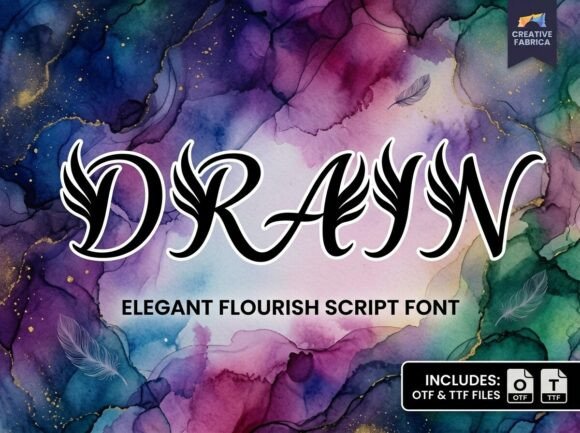
Typography is rarely just about legibility; at its best, it is an immediate emotional signal. Drain is an ornamental display font that understands this distinction intimately. Defined by ethereal, winged motifs and high-contrast letterforms, this typeface transforms standard text into a visual narrative. The primary stems are adorned with delicate, feathered wings that sweep upward, creating a rhythm that feels simultaneously celestial and edgy. For designers and creators seeking to move beyond utilitarian typography, Drain offers a sophisticated aesthetic where sharp, refined terminals meet soft, rhythmic flourishes.
The value of such a distinct typeface varies significantly depending on who is using it and for what purpose. While a seasoned art director might evaluate Drain based on its historical references and kerning pairs, a small business owner may simply be looking for a way to make their boutique’s signage feel more luxurious without hiring a custom lettering artist. Understanding these different perspectives is essential to determining if this font aligns with your specific creative or commercial goals.
Defining the Aesthetic: Celestial Meets Edgy
At its core, Drain is a study in duality. Most display fonts lean heavily into one direction: they are either aggressively modern or traditionally ornate. Drain occupies a unique middle ground. The high-contrast structure provides a classic foundation, ensuring the letters remain recognizable even at smaller display sizes. However, the integration of winged motifs prevents the design from feeling static or overly academic.
This combination creates a sense of handcrafted elegance and unscripted beauty. The flourishes do not look like digital afterthoughts; they appear integral to the stroke construction. For visual storytellers, this means the font carries its own atmosphere. You are not merely placing words on a page; you are invoking a mood that suggests mystery, elevation, and bespoke craftsmanship. This inherent personality makes every headline feel like a deliberate work of art rather than a placeholder.
Perspectives for Professionals and Brand Strategists
For experienced designers and brand strategists, the priority when selecting a typeface like Drain is often flexibility within a niche. You likely already have a library of reliable sans-serifs and serifs for body copy. Your search for Drain is specifically about finding a "hero" element that can anchor a visual identity.
High-End Boutique Branding: In luxury retail, differentiation is paramount. Professionals use Drain to signal exclusivity. The intricate details reward close inspection, which aligns perfectly with brands that sell tactile, high-quality goods. When used on packaging or storefront signage, the font communicates that the product inside has been curated with similar attention to detail.
Gothic Editorial Headers: Magazine layouts and digital editorials require typefaces that can handle dramatic scale without losing integrity. Art directors appreciate Drain because the sharp terminals maintain crispness in print, while the sweeping wings add necessary negative space and movement to dense layouts. It serves as a functional piece of illustration, reducing the need for additional graphic elements.
Professionals also evaluate the technical reliability of the font. Does it pair well with minimalist body text? Can it withstand color reversals? Drain’s refined construction generally allows it to sit comfortably against clean, neutral typefaces, letting the ornamental display face do the heavy lifting while supporting text maintains readability.
Creative Applications for Entrepreneurs and Makers
If you are a freelancer, event planner, or independent creator, your relationship with typography is often more direct and personal. You may not have a dedicated design team, so the font needs to deliver maximum impact with minimal manipulation. Drain appeals to this group because it brings a level of polish that usually requires custom illustration.
- Bespoke Event Stationery: Wedding and event stationery rely heavily on typographic hierarchy. Drain works exceptionally well for names, dates, and venue headers. Its ethereal quality suits romantic or alternative wedding themes, bridging the gap between traditional calligraphy and modern graphic design.
- Chic Streetwear Graphics: Fashion designers and merch creators often seek type that feels subcultural yet premium. The edgy undertones of Drain make it suitable for apparel graphics where standard gothic fonts might feel too cliché. It adds a layer of sophistication to streetwear that elevates the perceived value of the garment.
- Social Media Assets: Content creators need visuals that stop the scroll. Using Drain for quote cards, announcement overlays, or video thumbnails introduces a texture that stands out against the sea of generic bold sans-serifs common on social platforms.
For these users, the learning curve is less about mastering complex OpenType features and more about understanding spacing and context. Because Drain is so decorative, it demands breathing room. Beginners should focus on letting the font shine in isolation rather than forcing it into tight blocks of text.
Evaluating Fit: Skill Level and Project Goals
Determining whether Drain is the right tool requires an honest assessment of your project’s needs and your own comfort level with ornamental type. Not every project benefits from such a distinctive voice, and misapplication can lead to cluttered or confusing designs.
When Drain Is the Right Choice
You should consider integrating Drain if your project prioritizes atmosphere over rapid information consumption. It is ideal for titles, logos, short phrases, and decorative accents. If your goal is to evoke feelings of elegance, mystery, or artisanal quality, this typeface delivers efficiently. It is particularly effective when you want to avoid the cost and timeline of commissioning custom hand-lettering but still require a unique, non-generic appearance.
When to Reconsider
If your primary objective is utility, data presentation, or extended reading, Drain is likely not the correct solution. The winged motifs and high contrast reduce legibility at small sizes or in long paragraphs. Additionally, if your brand voice is strictly corporate, technological, or minimalist, the ornamental nature of Drain may create cognitive dissonance for your audience.
For Beginners: Start by using Drain solely for headlines. Pair it with a simple, high-readability sans-serif for all other text. Resist the urge to use multiple ornamental fonts in the same layout; let Drain be the singular focal point.
For Educators and Students: Drain serves as an excellent case study in hybrid typography. Design students can analyze how the designer balanced the weight of the wings against the vertical stems. It offers practical lessons in modifying traditional forms to create contemporary relevance without sacrificing structural integrity.
Balancing Commercial Value and Creative Expression
Ultimately, the decision to use Drain involves weighing creative aspirations against practical constraints. For business owners, the commercial value lies in brand recognition. A distinctive typeface becomes a proprietary asset; customers begin to associate those specific winged letterforms with your products or services. This long-term usefulness often outweighs the initial effort required to integrate such a stylized font into a broader system.
For hobbyists and artists, the value is purely expressive. Drain offers a playground for exploring themes of flight, spirituality, and darkness. It allows for experimentation with color, texture, and composition in ways that standard fonts cannot facilitate. Whether you are designing a zine cover, a personal portfolio, or a client’s rebrand, Drain provides a specific vocabulary for visual storytelling.
By understanding both the aesthetic capabilities and the practical limitations of Drain, you can make an informed choice that enhances your work. It is a tool designed for those who believe that letters should do more than convey information—they should inspire feeling. When applied with intention and restraint, Drain elevates visual identity from the mundane to the memorable, proving that typography remains one of the most powerful instruments in a creator's arsenal.