Fisherman Monogram: Vintage Display Font Guide
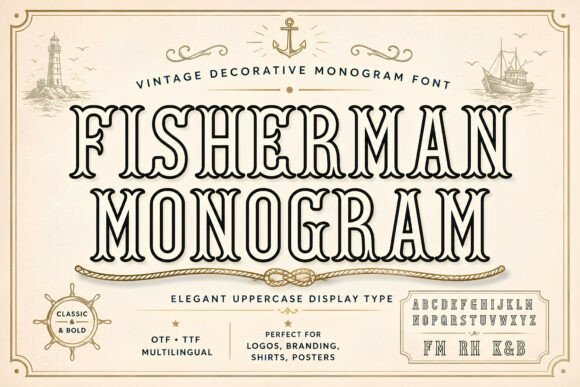
In the crowded landscape of digital typography, finding a typeface that balances historical authenticity with contemporary legibility is a genuine challenge for designers. Fisherman Monogram addresses this specific need by offering a vintage decorative display font that refuses to sacrifice readability for ornamentation. Designed with bold uppercase letterforms and elegant curves, this typeface carries a classic ornamental feel that immediately signals quality and heritage. For creative professionals and business owners alike, it serves as a versatile tool for establishing a refined yet striking visual identity without resorting to clichéd or overused retro aesthetics.
The true value of Fisherman Monogram lies in its ability to bridge the gap between old-style charm and modern usability. While many decorative fonts struggle at larger sizes or become illegible when scaled down for secondary text, this typeface maintains a balanced and professional appearance across various media. Its distinctive character makes it an exceptional choice for projects demanding a timeless, premium look, ensuring that your design communicates sophistication before the viewer even reads the message.
Defining Characteristics and Visual Strengths
Understanding the anatomical strengths of Fisherman Monogram helps designers leverage its full potential. The font is anchored by bold uppercase letterforms that command attention without appearing aggressive. This weight provides necessary contrast against lighter body copy, creating a clear visual hierarchy essential for effective communication. The boldness is not merely about thickness; it is about presence. Each glyph feels substantial and intentional, grounding the design in a sense of permanence and reliability.
Beyond the weight, the elegant curves distinguish this typeface from stiffer, more geometric vintage revivals. These flourishes are integrated into the structure of the letters rather than applied as afterthoughts, resulting in a cohesive ornamental feel. This integration ensures that the decoration enhances the form rather than obscuring it. For branding projects, this means the logo or headline remains highly readable even when stylized. The classic aesthetic avoids trending fads, making it a safer long-term investment for brands that cannot afford to redesign their visual identity every few years.
Practical Applications Across Industries
Versatility is often a buzzword in font marketing, but Fisherman Monogram demonstrates genuine adaptability across distinct sectors. Its strong visual presence translates effectively into tangible commercial and creative outputs.
- Luxury Packaging and Labeling: High-end products require typography that justifies a premium price point. This font works exceptionally well on wine labels, artisanal food packaging, and cosmetic boxes where the tactile nature of print complements the ornamental letterforms.
- Event Stationery and Invitations: Wedding planners and event coordinators frequently seek typefaces that convey tradition and elegance. Fisherman Monogram provides a sophisticated alternative to standard scripts for formal invitations, place cards, and ceremony programs.
- Editorial Headlines and Publishing: Magazine art directors and book cover designers can utilize the bold uppercase styles for chapter titles or feature headlines. The font’s readability ensures that decorative elements do not hinder the reader's navigation through the content.
- Retail Signage and Wayfinding: Boutique shops, cafes, and hospitality venues benefit from signage that establishes atmosphere. The font’s clarity at a distance makes it suitable for storefronts and interior directional signs that need to maintain a thematic consistency.
- Merchandise and Apparel: From embroidered caps to screen-printed tote bags, the bold structure of the letterforms holds up well during production processes that might degrade finer details in other decorative fonts.
Enhancing Brand Identity and User Experience
Typography is a silent ambassador for any brand, and selecting Fisherman Monogram sends specific psychological cues to the audience. In an era of minimalist sans-serifs, choosing a decorative display font signals confidence and a commitment to craftsmanship. For entrepreneurs and marketers, this differentiation is crucial. When a user encounters this typeface on a website hero section or a product shelf, the immediate association is often one of established quality and attention to detail.
From a user experience perspective, the font supports efficient communication. Decorative fonts often fail because they prioritize style over function, forcing users to squint or guess at letters. Fisherman Monogram avoids this pitfall through its highly readable display style. This balance directly impacts engagement metrics; if a headline is instantly comprehensible, the user is more likely to continue reading or exploring. In digital environments, this readability contributes to lower bounce rates and higher time-on-page, as the visual entry point is welcoming rather than confusing.
Implementation Strategies for Designers
To maximize the effectiveness of Fisherman Monogram, designers should approach implementation with intentionality. Because the font possesses such a strong personality, it performs best when given room to breathe. Avoid setting entire paragraphs in this typeface; reserve it strictly for display purposes such as logos, headers, pull quotes, and short captions. Pairing is equally critical. The ornamental nature of Fisherman Monogram contrasts beautifully with clean, neutral sans-serifs or traditional serif body text. This juxtaposition highlights the decorative qualities of the display font while maintaining overall layout stability.
Consider the medium of delivery when adjusting tracking and leading. On printed materials like luxury packaging, tighter tracking can enhance the cohesive, monogram-like quality of the word shapes. Conversely, in digital signage or large-format posters, slightly increased tracking may improve legibility from a distance. Always test the font at actual size before finalizing production files. What looks elegant on a high-resolution monitor may require optical adjustments when rendered in vinyl, embroidery, or low-resolution web formats.
Evaluating Suitability for Your Project
Before integrating Fisherman Monogram into a workflow, assess whether its specific attributes align with project goals. It is ideally suited for brands targeting demographics that value heritage, authenticity, and luxury. If the objective is to convey futuristic innovation or stark utilitarianism, this typeface may create cognitive dissonance. However, for projects requiring a timeless, premium touch, it offers significant advantages over generic alternatives.
Freelancers and agencies should also consider licensing and technical compatibility. Ensure the font file includes necessary OpenType features if you plan to utilize specific ligatures or alternates that enhance the vintage feel. Verify that the weight variants available are sufficient for the intended hierarchy. A single-weight decorative font can limit design flexibility, so understanding the full family structure is part of professional due diligence.
Ultimately, Fisherman Monogram succeeds because it treats vintage aesthetics as a functional design element rather than mere nostalgia. It respects the intelligence of the viewer by remaining legible and professional while delivering the emotional resonance of classic ornamentation. Whether used for a personal passion project or a major commercial rebrand, it adds a layer of sophistication that elevates the entire composition. By focusing on real-world utility alongside aesthetic beauty, this typeface proves that decorative typography can be both a practical asset and a powerful storytelling device in modern design.