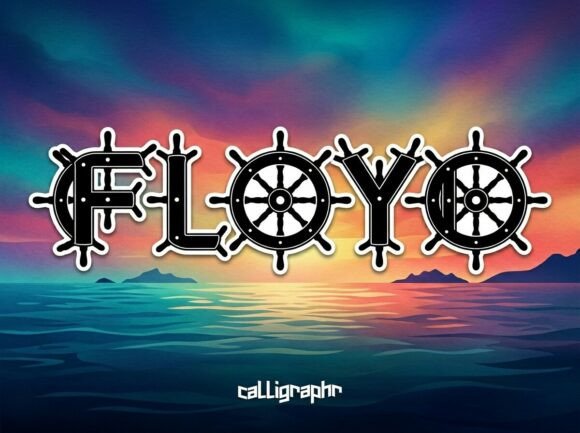
Floyd: Nautical Branding with Floyo Font
Typography is often the first signal of brand identity, communicating tone and atmosphere before a single word is read. For designers and business owners operating within the maritime, coastal, or adventure sectors, finding a typeface that balances thematic relevance with professional legibility is a persistent challenge. Floyd addresses this specific niche through Floyo, a display font that integrates nautical iconography directly into the letterforms without sacrificing structural integrity. Unlike novelty fonts that prioritize illustration over function, Floyo maintains a bold, chunky silhouette suitable for commercial application while embedding iconic ship steering wheels into every character.
This integration transforms standard text into a cohesive visual pattern. The result is a typeface that feels handcrafted yet disciplined, offering a distinct alternative to generic serif or sans-serif options typically used in seaside branding. Whether you are designing signage for a beach resort, creating a logo for a yacht club, or laying out an adventurous travel blog, understanding how to leverage Floyo’s unique characteristics can elevate your project from standard to memorable.
The Anatomy of Maritime Typography
Floyo distinguishes itself through rhythmic consistency. In many themed fonts, decorative elements are applied haphazardly, disrupting the reading flow. Floyo treats the steering wheel motif as a fundamental geometric component of the glyph rather than an afterthought. This approach ensures that the negative space remains balanced and the baseline stays steady. For creative professionals, this means the font performs reliably at large scales where details matter most.
The weight of the typeface is intentionally heavy. This boldness serves two practical purposes. First, it provides sufficient canvas area for the internal nautical detailing to remain visible even when scaled down for secondary headers. Second, it evokes the sturdy, industrial aesthetic of actual maritime equipment—brass fittings, painted hull numbers, and dockside signage. When selecting typography for coastal projects, this association with physical durability adds a layer of subconscious trust and authenticity to the design.
Strategic Applications for Coastal Brands
While Floyo is undeniably thematic, its utility extends beyond simple decoration. Successful implementation requires matching the font’s personality to specific touchpoints where high impact is necessary. Here are practical ways different industries can adapt this typeface effectively:
Hospitality and Dining Signage
Seaside restaurants and tiki bars often struggle with branding that looks either too corporate or too cartoonish. Floyo bridges this gap by offering professional coastal grace. Use it for primary exterior signage, menu section headers, or specialty cocktail names. The integrated steering wheels act as subtle texture, reinforcing the nautical theme without requiring additional clip art or complex illustrations. Pairing this display face with a clean, neutral sans-serif for body copy ensures menus remain readable while maintaining atmospheric immersion.
Yacht Clubs and Marine Services
For organizations requiring a sense of heritage and tradition, Floyo offers a modern interpretation of classic maritime aesthetics. It works exceptionally well for event posters, membership certificates, and directional wayfinding within marinas. Because the characters are uniform in style, they create a strong lockup for logos and emblems. Designers should consider using Floyo in all-caps for maximum authority on badges and flags, utilizing the steering wheel motifs to create a repeating border effect or monogram.
Travel Blogging and Editorial Design
Content creators focusing on sailing, island hopping, or coastal living need visuals that break up long-form text. Floyo serves as an excellent tool for pull quotes, chapter titles, and social media graphics. Its distinctive shape increases dwell time on headlines and improves shareability on platforms like Instagram and Pinterest. However, restraint is vital; use it strictly for display purposes to maintain a sophisticated editorial voice rather than a juvenile one.
Best Practices for Legibility and Hierarchy
Display typefaces with embedded imagery require careful handling to ensure communication remains clear. To maximize the effectiveness of Floyo in your visual identity, adhere to these functional guidelines:
- Limit Character Count: Due to the intricate detail within each glyph, Floyo is best suited for short phrases, titles, or acronyms. Avoid setting full paragraphs or lengthy sentences, as the repetitive steering wheel motif can create visual vibration that fatigues the reader.
- Mind the Spacing: The chunky silhouette of the letters may require optical kerning adjustments. Tighten tracking slightly for large-format signage to create a unified wordmark, but increase spacing for smaller digital applications to prevent the internal details from merging.
- Contrast is Key: Always pair Floyo with a highly legible supporting typeface. A geometric sans-serif or a traditional humanist serif provides necessary contrast. Let Floyo be the accent, not the foundation of your entire typographic system.
- Color Considerations: High-contrast color combinations preserve the definition of the steering wheel details. White text on navy blue, gold on charcoal, or teal on sand-colored backgrounds work best. Avoid low-contrast pairings or busy photographic backgrounds behind the text, which will obscure the defining features of the font.
Adapting Style Across Digital and Print Media
The medium dictates how Floyo should be deployed. In print environments like packaging or embroidered apparel, the physical texture of the material interacts with the font’s bold lines. On uncoated paper or fabric, the ink spread can soften the edges, giving the steering wheels a vintage, weathered appearance that enhances the nautical narrative. Designers should account for this by potentially increasing stroke width or simplifying details if printing on absorbent materials.
In digital contexts, screen resolution and rendering engines play a significant role. For web design, ensure Floyo is served in a format that supports hinting to keep the steering wheels crisp on standard displays. On mobile devices, test the minimum viable size rigorously. If the internal wheels become indistinguishable blobs at 24px or below, reserve the font for desktop views or tablet layouts only. Consistency across devices builds brand recognition; if the font fails technically on mobile, switch to a simpler alternative for responsive breakpoints.
Cultivating Authentic Visual Identity
Using a thematic font like Floyo carries the risk of appearing gimmicky if not grounded in genuine brand values. The goal is to evoke the spirit of the open sea, not to mimic a costume. Evaluate whether the whimsical nature of the steering wheel integration aligns with your audience's expectations. A luxury charter service might prefer a more subdued application, perhaps using Floyo only for initials or a tagline, whereas a family-friendly surf school could utilize it broadly across all marketing collateral.
Originality comes from context. Combine Floyo with custom photography, authentic textures, and a coherent color palette to create a holistic brand experience. The font should feel like a natural extension of your story, not a standalone decoration. By treating Floyo as a strategic design asset rather than mere ornamentation, creators can build visual identities that are both creatively adventurous and commercially effective. This balance of handcrafted charm and professional execution is what ultimately allows a nautical brand to navigate competitive markets successfully.